David Goldman is a veteran recruiter and job interview coach with over 25 years of experience helping people find and secure executive assistant, EBP and Chief of Staff roles.
In this episode of The Leader Assistant Podcast, David talks about proven job interview strategies to help executive assistants and executive business partners turn great interviews into great offers. David also shares tips on how to decide between multiple offers.
LEADERSHIP QUOTE
People don’t care how much you know until they know how much you care.
– Theodore Roosevelt
CONNECT WITH DAVID

ABOUT DAVID
David Goldman is a veteran recruiter and job interview coach with over 25 years of experience helping people find and secure executive assistant, EBP and Chief of Staff roles in the nation’s most notable companies, venture capital firms, and philanthropic organizations. He’s the founder of Ruby Peak Recruiting, founded in 2007 in San Francisco.
Beyond recruiting, David is passionate about coaching professionals—at all levels and across all industries—on how to approach job interviews with clarity, strategy, and confidence. He helps candidates understand what hiring managers and AI systems are really looking for, how to avoid common traps, and how to turn a decent interview into a game-changing one.
Before launching his career in recruiting, David ran a 250-seat performing arts theater in Colorado. He now lives in Truckee, California, where he’s an active mountain biker, skier, performing musician, husband, and father of three.
–––
THE LEADER ASSISTANT ACADEMY
Enroll in the on-demand, AI-powered professional development resource for Leader Assistants who want to level up. Learn more -> The Leader Assistant Academy.
THE LEADER ASSISTANT BOOK
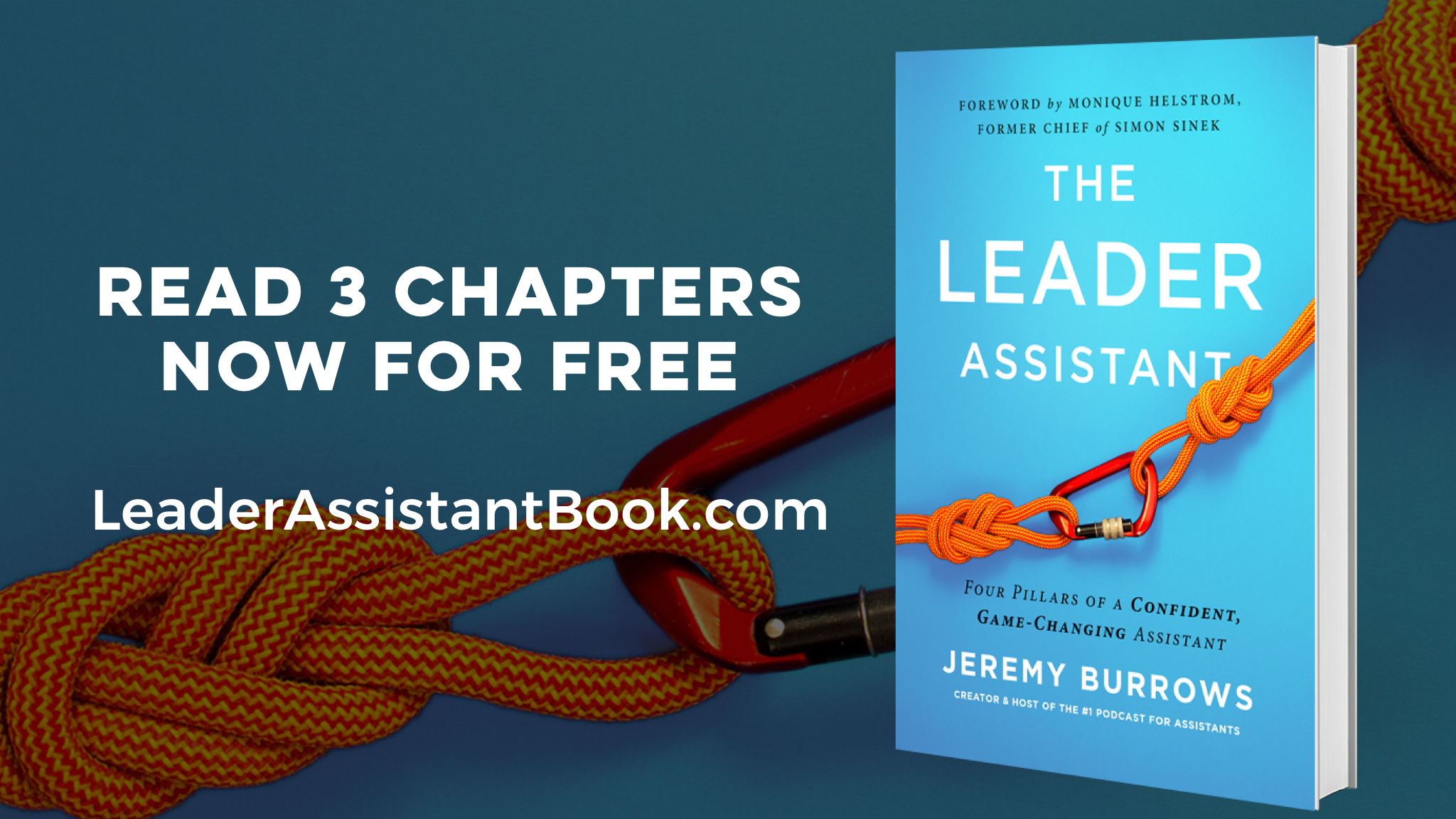
Download the first 3 chapters of The Leader Assistant: Four Pillars of Game-Changing Assistant for FREE here or buy it on Amazon and listen to the audiobook on Audible. Also, check out the companion study guide, The Leader Assistant Workbook, to dig deeper.
JOIN THE FREE COMMUNITY
Join the Leader Assistant Global Community for bonus content, job opportunities, and to network with other assistants who are committed to becoming leaders!
THE LEADER ASSISTANT PREMIUM MEMBERSHIP
To learn more about how you can join growth-minded Leader Assistants, check out our Leader Assistant Premium Membership for ongoing training, coaching, and community.
LEADER ASSISTANT LIVE EVENTS
Check out our constantly updated schedule of events for admins and assistants at LeaderAssistantLive.com.
SUBSCRIBE
Subscribe to The Leader Assistant Podcast so you don’t miss new episodes!
You can find the show on Apple Podcasts, Spotify, Google Podcasts, Pandora, and Stitcher.
Join my email list here if you want to get an email when a new episode goes live.
LEAVE A REVIEW
If you’re enjoying the podcast, please take 2 minutes to rate and review the show on Apple Podcasts here. Each review helps me stay motivated to keep the show going!
–––
EPISODE TRANSCRIPT
David Goldman:
Hi, my name is David Goldman, founder of Ruby Peak Recruiting, and today’s leadership quote is credited to Theodore Roosevelt. The quote is, people don’t care how much you know until they know how much you care.
SPEAKER_00:
The Leader Assistant podcast exists to encourage and challenge assistants to become confident, game-changing leader assistants.
Jeremy Burrows:
Hey friends, welcome to the Leader Assistant podcast. It’s your host, Jeremy Burrows, and this is episode 351. You can find the show notes for this conversation at leaderassistant.com slash 351. Again, leaderassistant.com slash 351. Today we have a very interesting topic to discuss, job interview strategies for assistants and really how to turn great interviews into great offers. So I’m excited to jump into this combo with David Goldman. David is a veteran recruiter and job interview coach with over 25 years of experience helping people find and secure executive assistant, executive business partner, and chief of staff roles in the nation’s most notable companies. And so David, welcome to the show. Excited to have you.
David Goldman:
Thanks for having me.
Jeremy Burrows:
What part of the world are you in? And what’s your favorite thing to do when you’re not working?
David Goldman:
That’s a great question. So after 20 years in San Francisco, I had an office on the same block in San Francisco for 20 years, 2020. We kind of hit hyperspace as a family and moved up to Truckee, Tahoe area. That is where we live now, three young kids. Prior to 25 years of recruiting, I was a musician. I still am a musician. And so when I’m not recruiting, you’ll often find me playing guitar with a group of guys up here, singing, mountain biking, skiing, and just getting outside.
Jeremy Burrows:
Nice. Awesome. I’ve been to Tahoe. I think one. I don’t think I’ve been there twice. I think I’ve been there at least once and definitely want to go back again. It’s beautiful, beautiful.
David Goldman:
Yeah. You know, it’s funny. We had not spent a lot of time here as a family in the 20 years that we were in San Francisco and Oakland. But I’m glad that we rented a house for a week when COVID hit and we stayed going on our sixth year. Wow. Love it.
Jeremy Burrows:
Well, thanks so much for joining. Tell us just real quickly, you know, how did you get into the recruiting profession? What’s your background? And then we’ll transition into like, you know, why, why specifically the assistant chief of staff EBP roles?
David Goldman:
Sure. So I fell into recruiting backwards. Like I said, prior to recruiting, I was in the music industry. I was producing live performances. I moved out to San Francisco to work for an arts-based website, which was essentially Kickstarter for the arts before its time in 2000. That company did not track very well. And searching for a job, I came across a job posting, got an interview for a role that looked like some type of support role, walked into a recruiting agency, and immediately thought, huh, this is not what I expected. Wasn’t familiar with what that industry really was recruiting. And my third question to my recruiter was, What is this place and tell me how this works? She shared a little bit about what the recruiting model was. I asked to talk to the owner, asked the owner if I could work there. She said, sorry, you have no experience. And the next day was 9-11. Well, 9 11 happened and I went back to her two days later and I said, I still want to do this. And she said, great. My whole staff pretty much just quit here. The one. So I started recruiting the week of 9 11. Um, and I loved it instantly and I’ve been doing it ever since. So I stayed with them for five years and then went off on my own to form Ruby peak.
Jeremy Burrows:
Okay. And then when you formed Ruby Peak, was it initially specifically for those roles, the EA role? Yes.
David Goldman:
So the agency that I worked for for five years, that was their niche. Anything on the administrative spectrum. Right. That was the specialty during that time. I did take some kind of generalist searches if I heard of them and people gave me the trust. But that became the focus and that started my network really in the Bay Area of that group. And so I just stuck with a good thing. I enjoy it. You know, a lot of really smart people have pursued the executive assistant role and I’m watching it attract more and more talent over the years. And so, yeah, I always tell a lot of people, you know, stick with a good thing. If you find something, you’re good at it. Awesome. Enjoy the ride.
Jeremy Burrows:
Cool. Well, let’s, let’s dive in then. I’m really, you know, I know there’s a lot of assistance, you know, cause they reach out to me on LinkedIn or they reach out, you know, reply to my newsletter emails and, you know, Hey, I’m having a hard time landing a job or, you know, I’m getting a lot of interviews, but I’m not getting any offers. So just maybe talk through some practical tips for assistants listening who are in the job market right now and, you know, are frustrated about the process.
David Goldman:
Yeah. The first thing I like to remind people is, you know, don’t, don’t confuse good interviews with offers. Right. Um, you know, my 25 years of feedback from clients, I hear a lot of feedback saying, Oh, so-and-so was great, but here’s why we’re not going to hire them. And so what I really have paid attention to is, you know, 25, 35, 50 different patterns, things that come up, um, that people fall into what I call interview traps. Um, If I had to, you know, I find at the end of the day, people take one of two, um, kind of strategies, whether they know it or not. The two strategies that people take in interviews are, Hey, this is a, what I call all cards on the table. This is a two way street interview. I’m going to interview them as much as they’re going to interview me. And let’s just get to the bottom of this and see if this is a great fit. That’s one strategy. Another strategy people take is what I call the audition strategy, which is to say like I don’t have the job yet, so I’m just going to go in there, tell them what I can do, explain my skills and strengths and. you know, put, leave it all on the table there. And then if I get an offer, I’m going to decide if I’m going to take it or not. I’ve seen both strategies work very well, but I have noticed that for executive assistant roles, when companies are wrestling between two, let’s say hypothetically two final candidates, and one has taken the all cards on the table to a street interview strategy, and the other has taken the audition strategy. I’ve, found that 100% of the time companies gravitate towards the two-way, sorry, towards the audition candidate in the context of the executive assistant role because they find that that person appears to be more customer service oriented, appears to be more, um, flexible. And so this is a topic I could talk about for hours and hours, just that one example, because a lot of people say to me, well, Dave, I’ve taken the two way street interview every time. And I’ve always gotten the job. And to those people, I say, that’s because, I mean, that’s great. And it works. And you can tell you really know your stuff when you take that approach, but, When you, when, when compared to somebody who has equal skillset, equal experience, equal credentials, um, this notion of flexibility of the audition person, it is, like I said, companies do gravitate in that direction and. I don’t know if you can weigh in on that because, you know, people do push back on that notion, but I’m happy to chat about it.
Jeremy Burrows:
Yeah, I would actually be interested because, you know, a lot of times people are like, well, you know, you should, and I’ve said it before, too, like you should interview the other person, the interviewer as well. Like you want to know, hey, is this executive going to work me to the bone on Saturday nights? Is this, you know, how was their experience with their prior assistants? Did they have assistants that only lasted a few months? Was it, you know, and then, you know, if their last four assistants only lasted a few months at a time, that’s a red flag. Like, So you kind of want to like get to know a little bit of the story there. So I’d love to maybe practically and try to try to illuminate that point a little bit more in the sense of what what are the differences because it’s kind of nuanced you know it’s nuanced but what are the differences between the person that’s the you know interviewing back and forth and then the person that’s more of that flexible audition style.
David Goldman:
So a few things number one all those questions that you just that you just referenced are valid and reasonable and important. And I think it comes down to a how those questions are asked and when those questions are asked. So, you know, I know we won’t have a lot of time to really get into the details, but How questions are asked fall into also one of two buckets, right? People either field a question and they think, oh, this person is really skeptical. They’re nervous. They’ve been burned before, or they’re talking about this, or they just want to know, hey, tell me more about the boss. Tell me more about the history of the job. If it lands in the bucket of I’m really curious, and the more I know, the more I can explain how I’m relevant, you’ll get your same answer. And if you ask it in a way that comes across as skeptical, that is the bucket that checks the… potentially not flexible box, or maybe had a bad experience box, or is coming in a little bit salty over something. And I feel like, again, it’s not to tell people you should wipe your concerns under the rug. It’s how the question is asked. The other thing is that I sometimes tell people in the interview, the two-way street interviewer is going to dig with a shovel. Every time they get to an issue, they’re going to dig to the bottom of it. I want to get to the bottom of this. And the audition person is going to dig with a spoon. they’re going to glean a little bit from the conversation and then they’re going to put into what I’ve kind of coined what I call the offer file. The offer file are the list of questions that say to yourself, if I get an offer here, I’m going to circle back and get more clarity on these things in my offer file. Right? So here’s the biggest irony, the two way streeter, takes the interview and they dig with a shovel on everything, and they come out of the interview and they say, wow, I’m so glad I asked all these questions. I’m really interested in this job. It’s perfect for me. The audition person says, look, we talked about everything. It was conversational. I had questions. We had a great meeting. I have a couple of questions if I go the distance with this that I might circle back to. Then the client says, We have these two terrific finalists. They’re both charismatic and experienced and have the credentials, and we’re really not sure. But the first person, I think we can tell that they know their stuff because all the questions they asked were very poignant. You know they’ve been in the trenches. They know what they’re talking about. But compared to this other person, we just worry that this first person is a little bit, again, not very flexible and God forbid this job changes or something morphs and all of a sudden it doesn’t line up perfectly with this first person, we’re worried they’re going to say, ah, that’s a line too far, that’s not in my job description, etc. whereas the audition person gets the offer and then says this is great I got a couple questions for you in your interview we talked about the fact that this role has cycled over a couple times can you tell me more about what hasn’t worked you know you’ve told me that in the interview you asked me what my accessibility was after hours right the two-way streeter is going to say well do you mean saturday nights and weekends and if i’m in a movie with my kids or i get pulled out and the company says no no no no no it’s not that bad and the two-way streeter says okay great then i’m in this is a great job for me the audition person takes that question they say what’s your accessibility and they say well let me just tell you about my current situation my last boss used to travel to Hong Kong and Asia and Europe and so time zones I’m very familiar but in the offer file they’re saying I think they’re shining a light on something and if I get an offer here I’m going to revisit this so now the offer comes and this person says hey you mentioned accessibility in the interview and like I told you I’m very familiar I’m accessible I understand how this job works tell me more I really want to know that we set our expectations the right way So again, now that you’re on equal footing with an offer, you can really turn into the two way street interview in a really authentic way. And the company’s even more invested in giving you that information because now they do want to hire you and they want it to be successful. I’m a big believer in this.
Jeremy Burrows:
That makes sense. Yeah. Cause in there, they’ve already made the offer and they don’t want to have to go through the process again for someone else or, you know, so that, that makes a lot of sense. I like that.
David Goldman:
My one exception to this rule though, is if something comes up that’s just a deal breaker in an interview, They say, look, you’ve got to go to Cleveland every Tuesday to get the mail. I’m not suggesting that you say, oh, that’s fine. And once I get an offer, I’m going to say, no way am I going to Cleveland. If it’s the elephant in the room, I’d never lie in an interview. You can address it flat out. But you get my point.
Jeremy Burrows:
Yeah, no, that makes sense. That makes sense. Yeah, and I like the, I like the offer file tactic. That’s, that’s really helpful. Thanks for sharing. So, okay, so let’s say, you know, an assistant listening is gone through a bunch of interviews, they do have done a pretty good job at being the more the auditioner and flexible and all that. And then they, let’s say they get multiple offers. So let’s say they’ve got a few offers on the table. One of them’s better pay, but maybe a little bit more demanding. One of them’s maybe not as good pay, but maybe more flexible on the hours. How do you navigate and help assistants and chiefs of staff and executive business partners navigate determining which offer to take if they if they’ve got that, you know, that’s a champagne problem.
David Goldman:
That’s right, having multiple it is, but it’s common scenario, my practice, you know, I’m always telling people, look, as a recruiter, I love helping people. And it is a rewarding job. But I’m really helping the people who need the least amount of help, because I’m looking for the best talent that I can possibly find for my clients. And it’s common for them to get multiple offers. I think the first dilemma they have is, How do I time my offers in a way where I don’t have to put a gun to the head and decide when I have another one coming down the pipes? Right. And so I oftentimes help people manage a little bit of pushback, you know, on can I have a little bit of time to to sit on this offer. My short advice there is always kill people with kindness, right? You tell them, I am excited. It’s been an extremely interesting process. And I want this to be a thoughtful decision. And like you, who took your time to really figure out who you wanted to hire, I also just need a minute to make sure that I make that right sound decision. And so kill them with kindness. to ask for more time on an offer when they’ve put you through the ringer maybe and had you interviewed for three or four or five weeks is not an unreasonable ask. And I think that any company box at that, that might be a sign that something’s going on there too. So to your question, how to decide, One thing I do as a recruiter is when I meet someone and I interview them, I ask them, what are the must haves? And then what are the dream job, uh, kind of criteria that you’re looking for? That’s when I first get to know someone. Then when we fast forward to offer stage, I go back to that list and I remind them of what they said, you know, coming into this role. When we first met, you told me a few things that you were really hoping to find or looking for things that you loved were A, B, and C. And I just remind them of that. A lot of times what I do is step out of the way as a recruiter and I say, look, hey, it sounds like you have some questions or concerns. Let me set up another call for you. You know, let’s have you talk to more people because I don’t want to be the recruiter who gets in people’s way. I want to be the recruiter who just helps facilitate the relationship and the process. So that’s a thing that I do often is set up an unscheduled call one more time. Let’s talk to each other and get more information. Um, that’s the, that’s my favorite way to do it. Help them decide.
Jeremy Burrows:
Yeah, that makes sense. That’s awesome. Thanks for sharing. Um, so, you know, there’s a lot of, you know, I just talked to an assistant, they’ve been looking for months for a job and nothing was, it was, it was very discouraging. You know, they were like, I haven’t gotten any offers, but I’ve, I’ve gotten really far in the interview process. And then all of a sudden, in a week’s span, they have two offers and another one that’s potentially going to turn into an offer. And so I love that point about don’t be afraid to say, hey, can I get some more time to consider this? Because they’ve been put through the wringer and you go through this phase where you’re like, OK, if I get an offer, I’m going to have to take it because I haven’t gotten any offers in months. And then all of a sudden, you get multiples.
David Goldman:
Yeah, it’s a reasonable ask, and I think as long as you explain it too, and the worst they can do is say no, right? Right. Yeah, totally.
Jeremy Burrows:
Well, David, this has been great. Thank you so much for the tips. I know we could both talk about this forever. What’s maybe one more note or final word you want to share to encourage the assistants listening who are in that stage of life right now and stage of their career where they’re just trying to go through the grind of applying and interviewing and all that?
David Goldman:
Yeah, you know, I usually come in when it’s when it’s interview time. So I know people have a lot of time, you know, even getting an interview. The best advice I can give people is understand that if you can get an interview, you have as much of a shot at getting the job as any other person who got an interview. And I often say that resumes are kind of like tickets to the movies. You need one to get in, but they rip it up before you even walk through the door. It’s more about the story that happens. So be an active participant in trying to get the job. Be unscripted. You know talk about One thing we see happen a lot as people talk about their past jobs that weren’t great jobs for them But they forget that those are still assets to their next employer So if you’re coming off of a bad experience or you’ve had jobs in your past that were not a good fit You still got great working experience tactical skills and experience that you can bring to your next table or to your next You know company so speak positively and find value in all your experiences Like I said, be unscripted, be genuine. I mean, there’s so many traps and tips I can talk if anybody wants to talk in more detail, they can reach out to me. But yeah, that’s, that’s all that’s coming to mind primarily.
Jeremy Burrows:
Oh, that’s great. Well, speaking of reaching out to you, so how do you typically work? Are you interested in assistance, you know, reaching out and You’ve got a bunch of people that are trying to hire assistants and you’re trying to find good talent. Are you like, what’s the focus of your recruiting?
David Goldman:
You know, on the website, there’s rubypeakrecruiting.com. There’s a resume intake and people can send me messages there. And I’m always happy to meet anybody who’s looking for work in the administrative field. There’s not a guarantee I can get a job or an interview for everyone, but I’m always happy to meet people. I also offer coaching. So that’s something that people can reach out and inquire about. I recently signed up for a company called intro.co, I think it is. And I’ll put that on LinkedIn as well. But probably the best way to find me is through the website, rubypeakrecruiting.com. And there’s a contact portal there.
Jeremy Burrows:
Cool. Perfect. Well, I’ll put that in the show notes along with your intro link and LinkedIn and all that. Leaderassistant.com slash 351, leaderassistant.com slash 351 if you want to reach out to David and learn more about his recruiting for executive assistants. Thanks again, David. Appreciate the work you’re doing and helping the support professionals find good roles and even just educating those that are hiring on, you know, the value of this role. And so I appreciate your career and what you’ve done for our industry. And it’s been great chatting with you.
David Goldman:
Thanks. Same to you. Great speaking. Appreciate it. We’ll talk soon.