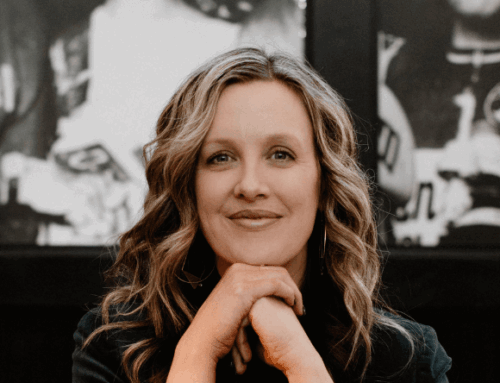
Diana Brandl is a longtime C-Suite assistant, and host of the Executive Office Insights podcast.
In this spotlight episode, Diana speaks with Danny McCubbin, former PA to Chef Jamie Oliver.
CONNECT WITH DANNY
- Danny on LinkedIn and Instagram
- Danny on Substack
- The Good Kitchen
- Danny’s book -> The Good Kitchen: Love and Connection Through Food
ABOUT DANNY
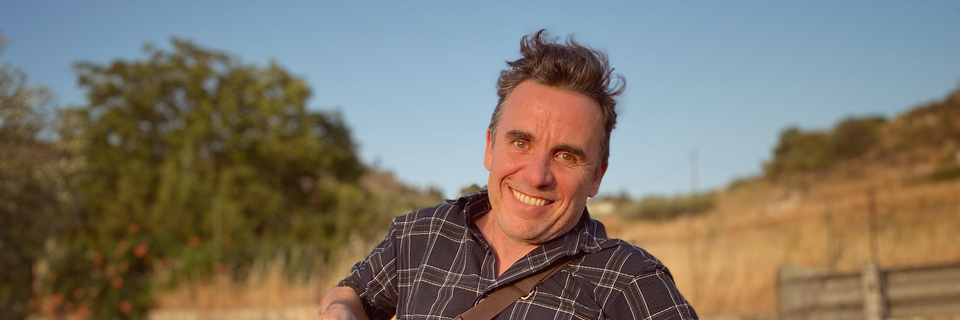
Danny McCubbin is an accomplished Social Media & Workplace Culture Consultant. In 2003, Danny began his long and successful career with chef and campaigner Jamie Oliver. He worked across his digital, social media & marketing platforms delivering on major campaigns, all with the combined aim to promote healthier food & home-cooking skills both in the UK and abroad.
In his last role as Culture Manager for Jamie Oliver LTD, Danny was responsible for growing a corporate culture that brings Jamie’s food ethos to life across the business.
He has built an engaged social media community & regularly runs social media workshops for small & large businesses. Danny often speaks at international conferences on how food can be used as a force for positive change and is consulting with businesses on social media and workplace culture.
But there are so many more stories to tell about Danny. He moved to Italy in 2020. The Australian media consultant snapped up a €1 house in Mussomeli, a rustic town of 11,000 people in Sicily’s rugged hinterland. Danny also set up The Good Kitchen which is a charity that trains chefs from across the world and prepares free sit-down meals and healthy food deliveries for the town’s disadvantaged people.
ABOUT EXECUTIVE OFFICE INSIGHTS with DIANA BRANDL
Executive Office Insights is a podcast for executive support professionals hosted by Diana Brandl – an accomplished trainer, consultant, coach, and former C-suite senior executive assistant with nearly two decades of experience at renowned international companies, this podcast dives deep into the evolving world of executive excellence.
Diana explores the critical themes shaping the modern workplace, including leadership dynamics, digital transformation, AI, and the future of work. Featuring insightful conversations with a diverse range of German and English-speaking experts, each episode equips listeners with actionable insights and strategies to thrive in the ever-changing executive office landscape.
–––
THE LEADER ASSISTANT ACADEMY
Enroll in the on-demand, AI-powered professional development resource for Leader Assistants who want to level up. Learn more -> The Leader Assistant Academy.
THE LEADER ASSISTANT BOOK
Download the first 3 chapters of The Leader Assistant: Four Pillars of Game-Changing Assistant for FREE here or buy it on Amazon and listen to the audiobook on Audible. Also, check out the companion study guide, The Leader Assistant Workbook, to dig deeper.
JOIN THE FREE COMMUNITY
Join the Leader Assistant Global Community for bonus content, job opportunities, and to network with other assistants who are committed to becoming leaders!
THE LEADER ASSISTANT PREMIUM MEMBERSHIP
To learn more about how you can join growth-minded Leader Assistants, check out our Leader Assistant Premium Membership for ongoing training, coaching, and community.
LEADER ASSISTANT LIVE EVENTS
Check out our constantly updated schedule of events for admins and assistants at LeaderAssistantLive.com.
SUBSCRIBE
Subscribe to The Leader Assistant Podcast so you don’t miss new episodes!
You can find the show on Apple Podcasts, Spotify, Google Podcasts, Pandora, and Stitcher.
Join my email list here if you want to get an email when a new episode goes live.
LEAVE A REVIEW
If you’re enjoying the podcast, please take 2 minutes to rate and review the show on Apple Podcasts here. Each review helps me stay motivated to keep the show going!
–––
EPISODE TRANSCRIPT
Jeremy: 00:46
Welcome to the Leader Assistant Podcast. It’s your host, Jeremy Burrows, and one of the things I love about having my own show is I get to decide what I want to produce and share and publish on this show. So one of the things I’ve done, if you’ve been listening for a while, is spotlight other executive assistant podcasts. The Whole Assistant Podcast by my friend Annie Croner, the Ask an Assistant podcast by Jess Lindgren, are a couple of them that I’ve spotlighted several times on this show, the Leader Assistant Podcast. Today I’m excited to spotlight my friend Diana Brandl’s show called Executive Office Insights. Diana has had some amazing interviews over the years on her show, formerly known as the Future Assistant Podcast, but now it is called Executive Office Insights. Definitely check it out, and I’ll link to it in the show notes. But I hope you enjoy these featured episodes with Diana and her amazing guests.
Speaker 2: 02:21
And for sure, this was part of his career for a long time. He has been working as culture manager for Jamie Oliver Limited, where he was responsible for growing a corporate culture that brings Jamie’s food efforts to life across the business. He was also involved in social media and taking care of so many other wonderful projects in the Jamie Oliver world. But of course, I’m curious, in addition, to find out more about Danny, what he’s doing right now, and how it all happened that he moved away from London going to Italy, investing in a wonderful passion project, which is called the One Euro House. And what he launched and what he established down there in such a short amount of time is simply amazing. So definitely make sure that you check the show notes because you’re going to find a link to Danny’s blog, Good for Good, and then of course his website. So I’m very looking forward to introducing the wonderful Danny McCumin to all of you. Welcome everybody to the podcast of Future Assistant, a podcast full of inspiration, encouragement, and empowerment for administrative professionals. Tune in, level up, and get motivated by the stories you are about to hear. Hello everybody. And you know, it’s always a pity when I don’t get to meet these people in person. And specifically today, I would have loved to travel to Italy to meet Danny over there who’s joining us today. Hi, Danny. Hi, Danny. Hi, everyone. You’re welcome here in beautiful Sicily anytime, Dana. I hope I can do this. I really want to visit you over there, especially with the wonderful uh initiatives you’re running uh over there. But um, we’re gonna hear about this uh a little later. So thank you so much for being with us for this interview, Danny. And I know it’s been a couple of months since we did the expert talk where you were uh joining me and my community, and we were talking about your role, uh what you’ve been doing in the past, what you’re doing now. Uh, we were preparing some food together. It was a very, very nice evening. I love to uh just uh remember back uh at this evening, and the feedback was incredible. So people were asking about doing a podcast, of course, because uh not everyone was able to join us. So I’m very thrilled to share more of you here today. Um, so why don’t we start um uh and I would love to invite you to just talk a little bit about yourself. So uh who’s Danny? That’s a big question, Diana. But it’s a good one to start with. So thank you so much for uh connecting with me again. And yes, I I love that session we ran for all of your community. I thought it was really special. It was, you know, it was winter here in Sicily, and I wasn’t long since I had moved here, so it was lovely to connect with everyone and also to share some uh some of some of my favorite recipes as well. So so I am uh Australian originally, so I uh my family are in Australia. I grew up in Australia, I traveled quite a lot when I was younger. Uh my grandparents are from the UK. And in 1998, I’d been backpacking sort of early 90s. In 1998, I decided to move to London as I was able to get the ancestry working visa. And so I always pictured that I would move there for a couple of years and then get the travel bug out of my system and move back to Australia. However, uh 23 years later, uh I was still there. So a big part of my life was was London in the UK, and now I’m living in the most beautiful town here in Sicily. Absolutely. And uh we’re gonna hear about this later because it’s a very interesting transition uh you made, uh saying goodbye to one country and just starting a wonderful project in another one. So I would love to hear more about your professional background, Danny, and how did you actually become an assistant all these years back? So yeah, it’s a long time ago. Uh but a very, very exciting chapter in my life. I in 1998, as I said, I moved to London. I originally was quite a well-known ceramicist in Australia. So I used to make uh sculpture and I had a master’s, well, a master’s degree in ceramics from uh RMIT in Melbourne. And I and I sort of moved to London with the intention that I would either work in craft or continue my career in art, but I didn’t know anyone in the town, and I felt the need that I wanted to work still. Uh so I just started temping for a Deco. And so a lot of people who listen to the podcast would know about a Deco where they people, you know, for assistant roles and for admin roles all over the world. And I had a wonderful time for the first two years, sort of, you know, temping and then traveling and temping and traveling. And I ended up working for IBM in the education department uh for four years, and that was the first four years of my time at London. And one of the things that I really loved was that I was able to work and travel. Um, I worked in the education department, uh, it was just the onset of um digital technology. So I was working for a department that was involved with certification of IBM products. I mean, it was quite technical for me because I’m a bit more of a right-brained thinker, but I just loved the whole learning process. And IBM, they put me through a project management course as well, and I just thought, you know, this is really a really good skill to learn. And I think project management in general is, especially nowadays, those skills that you learn around project management are so transferable. And so I worked in IBM with a Deco for four years, and then I decided I needed to see more of Europe. So I took off again, traveled, and went back to Canada, came back to London, didn’t have a job uh at all, but I just sent my CV out to everyone I knew. And a friend of mine from Australia was working for Jamie Oliver as his art director, and he said, Oh, look, Dan, there’s a job going in the office. They need a bit of an all-rounder. Yeah. I know you’ve got, he knew I had project management experience. Why don’t you go for the job? And so I did. And back in those days, Diana, the there was no HR department within Jamie’s organization. Uh, it was very much a family-led business. Uh, there were probably 17 of us in the whole company when I started, but most of the people that worked there were either personally recommended for the job or people that Jamie had been working with since he would been filming the Naked Chef series and producing books. And so I went for the job as PA to the head of uh brand and marketing. And my first interview with this wonderful woman by the name of Tessa Graham, uh, she actually said to me that I was overqualified for the job. Um, feedback afterwards, and usually Diana, I’d be like, oh, well, that’s you know, one door closes, another 10 opens. But I really wanted that job because I was so enamored with not so much Jamie as a celebrity, but what he’d done around 15, which was the restaurant that trained uh disenfranchised franchised young people. Yes. So the first job that I the interview that I went to, there was no job spec, it was just VA. Uh, and we spoke about the sort of the job role. And so what I did was I said to Tessa via email, I would love, is there any chance to look at the job spec? Because I’d love to find out a bit more, and maybe there’s other positions within the company. And so she sent me the job spec, and one of the to kind of long story short, one of the first uh job roles within that job spec was to work on Jamie’s websites with Tessa. And so because I’d worked at IBM for four years and had all that sort of digital experience, I then wrote a synopsis of Jamie’s website at that time in 2002, uh, which was this clunky old website which had a few recipes and nothing else. And then I wrote this whole proposal on how you could have a rep website that was all about food and cooking and writing blogs. And so Tessa got back to me and said and said, look, come in and meet some of the rest of the team. And I did, and that’s how I ended up getting the job. Um, and it was a pivotal time in my life because you know, I people were often thinking, why is Dandy giving up his career in art and ceramics and working for IBM? But at the time I knew that it was something exciting and something new, and that it would lead to something else. Um and that’s the only reason I ended up getting the job, and then the rest is really history. I ended up spent staying with Jamie, working for him for 17 years. I know. And you had all these fantastic roles while working with him. So in 2003, you began your long career with uh chef and campaigner Jamie Oliver, working across his digital social media and marketing platforms, and later as his uh personal assistants, delivering on major campaigns such as Jamie’s School Dinners, Jamie’s Ministry of Food, and as you mentioned, the the 15 Apprenticeship Program. And um so uh it’s a fantastic uh uh variety of roles connected uh to to be close to Jamie. So tell us a little bit more about um how it all impacted you. Yeah, well, I just was at the right place at the right time, Diana, because it was, as I said, it was a small company back then, and there were so many opportunities to learn and get involved in so many different projects. So our office was above 15. So the restaurant in London that was a social enterprise, and everyone in the company, no matter what role they they had in the company, was involved with that restaurant because it was crucial that the restaurant survived. It was crucial that the restaurant was able to raise money to train disenfranchised youth. And then similarly, that transpired into every campaign that Jamie did. So not long after I started as his PA, we started the school dinner’s campaign where we challenged the government to feed kids in the UK uh good food, good and nutritious food. And so it was an exciting time because you know, Jamie was the type of person that would really give a lot of freedom and encouragement to the people who work for him to achieve whatever they wanted to achieve. And when I was his PA, I always remember there was a production meeting with Channel Four and the production crew about the campaign about school dinners. And so Jamie said to me, Oh, I’ll see you there. And I was like, Oh, you know, you want me to come to that meeting? He goes, Absolutely. I’m invited. Yeah. And then and that’s how he was, and that’s how he is. He’s just very inclusive, yeah, he’s very inquisitive of people, no matter if it happens to be the CEO of his company or you know, his PA or a receptionist. It does just, it’s you know, there’s no hierarchy in his company. And so for me, it was just an extraordinary time, Diana, because I was able to explore and discover and learn new skills for the all of the time that I was there. Um, and as you mentioned, I worked in various roles. Uh I worked, ended up working for his foundation for a number of years. Uh, always, always with digital and social media and communication, sort of the heart of everything I did. And then the last role I did for two years was probably the one that fitted my skills and personality the most. Uh, and that was um his cult, I was his culture manager for the whole organization for the last two years, which was an extraordinary. Amazing. And I must say, I mean, uh, the term is so important. And and I I would love to hear more about the role, of course, because uh you were responsible for growing a corporate culture uh that brings Jamie’s food efforts to life across the business, right? So, um, how important would you say is culture management when it comes also to the role of the management assistant? And and what did you want to bring specifically into the role in in Jamie’s uh business? So, Diana, culture managers are crucial to an organization. Right. And I’ve said this before, I you know, it’s a good role for assistance to transition into because a lot of the role, a lot of the um kind of skills and the uh jobs that the culture manager carries out transfer very much to assistance and particularly personal assistance. So this job for me was initiated because we moved into this beautiful office space, which was a massive warehouse where for the first time the whole company was together. And it was the it is this most beautiful space where there’s kitchens and test kitchens and editorial team, and everyone is together. Um, there’s breakout spaces, there’s beautiful event spaces. And so when we moved there, everyone was like, Oh, we should do like cooking classes and we should do um a lot of the things that we were doing in the company before, but it was a challenge because we were in 10 different offices by the time we grew to that business. And so it was everyone was working kind of in silos. So because I’d been very much involved in the company, James PA involved in the company, been on the social committees, been on different kinds of working groups. Yeah, um, they asked if I’d be interested in being culture manager for the organization, which was being responsible for the food ethos internally for 150 staff in that building. So that involved cooking classes, the staff meals, I had a team of chefs, I was on the uh diversity inclusion inclusion working group. So then how could we um influence people around diversity through food, through the food that we made for lunches, through chefs from different backgrounds? And it occurred to me that the PAs and the assistants, I worked with them a lot because they were the ones that would really, you know, well, they were managing senior management’s diary, and because I knew everyone, right, and I’ve been there for so long, I knew it was really important that senior management buy into the culture of the organization as well, and they buy into the the events and they buy into what we were doing, and the only way they can do that is by being present as well. Right. So the I worked really closely with all of the assistants on something called the um, it was like a culture hub that I’ve created, and that was a culture hub where I bought in different uh aspects of the business. So the marketing team, the facilities team, the um senior management team, and basically everything around food, then I I worked around this culture, culture hub. Um, and that was my role for two years, but it was just extraordinary. And now, if you if you Google, and also the other important aspect of the role was food education and food ethos in the business, because a lot of the people who came to work for Jamie didn’t particularly need to know about food, so if they worked in roles, different roles. So my job was how we educate them, how we include them, how we make sure they feel included in all of that as well. But now, if you Google, particularly now with what’s happened with the nature and the landscape around office working and people returning to offices, if you Google culture manager, many big organizations and brands have culture managers where they tend to pick up on the jobs where people are like, so for instance, our out in our company, HR, we’re like, well, we’re not sure if we should do the internal comms. And then marketing were like, we only do external marketing. So the culture manager picks up, I picked up on all those jobs that I absolutely loved that seem to fall through the cracks in the different um departments within organizations. So now if you Google culture managers or culture manager role, you will see that a lot of the big organizations are actually advertising for culture managers. And it, as I said before, it’s a perfect segue for assistants and PAs to get into as well. Absolutely. And you know, I I think especially now since the pandemic, and we’re gonna, you know, see different working settings in the future. We’re gonna talk about hybrid a lot. So I think specifically we need culture managers, we need feel-good managers, we need people managers that are really, really assigned to specific roles, and I fully agree with you. Could be a very interesting field for assistance. Yeah. So um, how about you? I’m getting hungry. We’ve been talking too much about food already. Yeah, so I need to ask you that, of course. Uh, are you a foodie uh yourself? And what’s in your fridge? See, absolutely. So my grandparents were farmers back in Australia, so and uh I grew up knowing about food, and my family grew most of their own produce. Uh, and so I’ve always known about good food and how food affects our bodies and how important it is to eat good food, but and more importantly, how important it is to learn how to cook. And I have a brilliant mum who just had us in the kitchen all the time when we were kids. She wasn’t afraid to give us knives to chop, and she was just brilliant. Um, and so I’ve that was really put me in good steed, obviously, working for Jamie, but obviously for 17 years working for Jamie, I learned a lot about cooking and some simple skills, really. I mean, I’m I’m a very simple cook in many ways. I don’t that’s why I love Italy so much, because I don’t mess with flavors. If you have good produce, then that’s half the battle. And it’s all natural, and this is a good part, right?
Speaker 4: 21:32
Yeah, for sure.
Speaker 2: 21:33
So um, let’s talk about another passion of you. I mean, food. And uh obviously we need to talk about social media as well, because uh through your various roles, you have built and engaged social media following. And I can only say yes, you you do fantastic work on the social media. I’m a huge fan. Um, how you engage your community and in such a humble and authentic way. I truly appreciate this. How you really, really share uh so much uh also from your live in Italy with all of us. So, how important is a digital portfolio nowadays? And what are your top tips on social media, for example, on how to build an engaged and loyal community? Yeah. Thank you, Diana. So I I I really a lot of what I learned around digital engagement is I learned from Jenny. So my first major role was to project manage his the development of his website. Not much not so much on the build, but on the company that we would choose, that we chose, sorry, that would build the website. And I always remember that in 2003, when we launched his website, the company that won, it was a company called Polk in London. They had this facility when they came to pitch for the job, they had this facility to text an image from Jamie’s phones to the website. So they’d done a mock-up of the website and they texted the image and they were able to put a caption of where Jamie was. So this was pre-social media, this was pre-Facebook. And Jamie just absolutely loved that. And then the site, we actually blogs in those days were huge. And so we created this food blog, sorry, blog and forum where we had people from all over the world connecting and learning about food, and Jamie used to jump on there. And so everything I learned really, I learned from him. And you know, he he is so clever when it comes to digital um communication. I remember when I was um head of social media and working with Jamie. He wanted to do this, I think it must have been on Twitter when he had the Jamie magazine. And he said, okay, or maybe it was Facebook, I can’t remember. He said, let’s put up two potential images of the magazine cover that were that I’m undecided as to whether, you know, which cover is yeah, and I’m gonna ask my community. And so they had to vote on which one. And I was just like, that’s incredible, super engaging. Yeah. Super engaging. So I kind of learned all of that from him. And then of course I worked with him really closely on social media. So I managed all his platforms with him, and then I helped with various businesses to engage on on different um platforms. And the one thing for me that I really learned is that it’s all about giving back for me. It’s giving finding your niche about what it is you want to say. So obviously, the niche here is in Sicily. We’ll get to talk about that in a minute. But it’s also I I feel that it’s if I’ve got something to say and to give back, then that’s the most important thing. And I think we get wrapped up in, particularly if we use social media to sell or for our business, I think we get wrapped up in I’m gonna put a beautiful image out there. I’m gonna tell everyone that I’m I’m selling this, you know, class of the seminar or I’m doing this, and I’m gonna expect everyone to come and sign up. And exactly, you know, on Instagram, for instance, there’s like 80, 90 million photos every day get uploaded, and so there’s a lot of noise. Um, so my my top tips are always give back, always have consistency. So if you have a social media platform just for your business, don’t start talking about your personal life. A little bit different for me because it feels like my story and journey is contributing to what I’m doing here. However, I always do keep, you know, I keep it on on track to what I want to say. Give back, ask questions, post at the same time every day. Um build a small community. Don’t be worried about the number of likes you get, don’t be worried about the number of followers you have, build a small community. And then my biggest tip, particularly in the last, I guess, six months, what I’ve realized is don’t be afraid to build your own community by building a um your own website or your own blog. And I think you know, there’s a lot of people now that are moving more towards because it’s it’s so easy to build blogs through Squarespace or Wix. There’s a lot of people moving away from all the noise around, particularly around Instagram and Facebook, people losing trust in in those organizations and moving to building a very engaged community on their own platform. So don’t be afraid to do that. And you know, even brands are starting to do that as well. So, you know, there’s a whole whole move now towards micro influences. So though, particularly on Instagram, people that have less than 50,000 followers, because they know that their followers are going to be fake, that they won’t be bots, that they’ll be real engaged followers that will listen to what that person is trying to sell. So that’s kind of like a little capture of my uh top tips on social media. Absolutely. And there’s that’s a lot of valuable stuff in there. And what I also say, because as you know, I’m super active on social media as well, um, but you know, don’t compare yourself to anyone else. Yes, it’s your profile, it’s your story, it’s your community. And you know, uh, I always say this to people who feel like, do I have to say something? Do I need to post this? Uh is someone interested in my post? I always say, hey, even if you get five likes, uh there were five people who resonated with your post. Yeah. And maybe the next one, uh, although I’m a strong believer not to count any likes or whatever, um, next time there are a hundred people who who resonate with your post. But don’t, you know, don’t be shy about not going out there and share your story, right? Yeah, exactly. And then also, as I said, build your own audience. So a big move now towards Pinterest as well. Uh, Pinterest has become very uh the kind of I think the foremost place for if you build your own website or your blog to then have links from Pinterest through to your blog. And then don’t be afraid as well. So, for instance, if Instagram went tonight, then all those followers that you have, you have you don’t have their email addresses. There’s no way you can find them again. I think it’s really important just to build your own community where you have people signing up to a newsletter, people that are interested in what you’re doing, um, because that’s far more valuable than having hundreds of thousands followers. Absolutely. I so agree with you, Danny. Yeah. I’m glad that you shared these tips with us. And of course, if you guys want to hear more about social media, uh Danny, you speak at international conferences, uh, not only on social about social media, but also specifically the combination with food and how food can be used as a force for positive change. Um, you also consult on workplace culture and social media. So, um, how how do we find you? I’ll make sure to to link your website in the show notes. But is there anything out there you want to share with us? Yeah, thank you, Diana. So I have two sites. I have a blog called Good for Goods, and that’s all about kind of what I’m doing here in Sicily and my thoughts and aspirations and life. And then DannyBekopen.me is my work. Uh it’s most like my CV online. Um, I was working for a couple of brands remotely doing some social media in London, um, which has been fantastic. And really enjoying the presenting online because obviously I’m not isolated here, but it’s really lovely to connect. Yeah. Uh, and so I I’ve been giving some workshops on social media, so just some really simple, you know, one-hour drill down, how to engage online. I also do one-on-one sessions, which I really enjoy, which is I work with somebody who wants to have something to say. So that might be they want to start a business or they want to use social media for um their brand. But what I do is I actually question them and ask them, do they really need to be on social media? So I do this whole um kind of like analysis around like, do you just need a website? And and I kind of look at fresh eyes onto their brand, their terminology, the how they position themselves, how they talk about themselves. Because it’s sometimes difficult for us to talk about what we do. One of the greatest things I I’ve done in the last three or four years for my own career was to engage a freelance writer to write my bio and write my bio, which then led to my CV. And that then opened doors for me because people would look at my social media and think, wow, is he a chef? Is he cooked? Does he do recipe development? Is he always in Italy? Is he always on holidays? Right. You know, those statements that you read back to me, which is from my bio, is from an external writer, and and her name’s Malou, and she was able to write in in one page everything that you know I want to say, but I didn’t know how to put it into my words. Oh, that’s lovely. And thank you so much for giving the shout-out to her. Um, because uh I know that uh a good writing is really, really uh a great, great skill. Um, talking about social media and the skill set of the future assistant, do you see potential there also that assistants should jump into this uh topic? Because what I see here um when I work with assistants, uh they all of a sudden get asked by their um most of the time younger generation of manager, I want you to be uh a sparing partner for me when it comes to my social media branding. I want you as a storyteller, I want you to create um, you know, content also for me. So uh also talking about being a corporate influencer, um, positioning yourself out there. So, what’s your view on this topic when it comes to the role of the assistant? Yeah, I think it’s really really important. I mean, not necessarily that you have to engage yourself. So don’t be a think, oh goodness, I’m gonna have to, you know, be managing all of these channels or all these profiles, but you know, to be able to be the uh ears and eyes for senior management for the marketing team and for the social media team, to, you know, if you move into the culture manager role, so I work really closely with the social media team for Jamie’s organization because we had chefs, for instance, because I was on the diversity and inclusion working group, then we would have chefs from different countries that would come and cook. That’s beautiful content for Jamie’s channel. So it doesn’t don’t be afraid to embrace and learn about social media, but it doesn’t mean that you’re gonna have to actually manage it. I think that’s a different, that’s a different kettle of fish, right? So um, if you’re asked then to start managing the channels, then then I think you need to look at would you would need to look at your time and whether you can manage that because it’s social media is 24 hours a day. It’s true. If if it’s more just about to learn how to engage and find other companies, organizations that are doing great stuff on their channels, research, go for it, you know, and that puts you in good feed then for other positions as well. Um, you know, moving into culture manager roles or moving into marketing roles. Social media is not going away, it’s a big part of our lives, but definitely go for it. Uh, but but manage it in terms of what you already have on your schedule. Yeah, I think that’s a that’s a very wise um uh information you’re sharing with us. And um I I love to see more managers, of course, out there, you know, putting their brands out there. I think there are great social uh CEO brands out there. Uh where different definitely there’s a great storytelling and in a very authentic way, not about selling or anything. So I’m really, really uh always um very um, yeah, I see the potential definitely as well for assistants to jump on this role and to support with the social media team because the assistant knows the manager and they know the stories maybe from a different perspective, what they want to share. So the PR team and the social media team, they can for sure write something, but maybe the tonality or something that the assistant puts into the content of such a piece can make a difference, right? So I actually know an assistant who stepped in this role because she’s actively supporting her manager to uh create a CEO brand on social media. And I really see how how she’s doing, and I love that. So we’re coming to an end, but of course, I cannot let you go before we find out um why you actually relocated to another country, which is Italy. We’ve heard about this before. So Italy is your new home. Tell us about all the details from the move and what are you working on there at the moment? Yeah, so seven, I was with Jamie for nearly 17 years, and I always said that I would uh leave when I was kind of at the height of my time there. So the culture manager role, as I said, I felt that was the most befitting in terms of my skills and personality. And so a few things had happened in my at that time. It was May 19, 2000, 2019. Yeah. Um, my mum wasn’t well back home and I was, so my sister asked when I at Christmas if I was coming home, if I could come home for a bit longer. I had a few health issues myself, which I hadn’t sort of taken care of. Um they were food, I thought they were food related, but they weren’t. Um and I just felt that it was time to go. You know, when you just sort of realize um I oh and I always thought, you know, I have to have something to go to, or I have to have another job, or I have to, but it’s not true for me. I mean, I’m 57 this year, so I was looking at the next phase of my life, which was to taking life a bit easier. How could I work freelance? How could I work remotely? I definitely wanted to live in Italy, so I’ve been volunteering for a community out here for the past 10 years. And I decided that I would just take a leap of faith and resign without without having anything to go to. And I previous to that, for the the year before that, I was, you know, I was dipping my toe in the water around presenting, and I mean I worked part-time in the culture manager role, and everyone was very supportive of me around public speaking and what I was doing. And but I never felt right kind of dipping my toe in the water about other work whilst I was working for Jamie. It’s just the way I’m built. Um I did it, even though the company was like, it’s totally fine, and you can, you know, I once flew over to Hamburg and I spoke at this um incredible day where Metro supermarket, they needed a team bonding around food, and I understand. Yeah, it was a lovely, lovely day and I got paid for it. Big company, yes. Yeah, I got paid for it. But the thing is, Diana felt really bad about being paid. So I was like, you know what, I’m never gonna find the next step if I feel bad about accepting money. The money won’t just no one will pay me. So I just took a leap of faith. Um, I’ve always wanted to live in Italy, and I had heard about this one euro house project where towns were selling houses to foreigners uh as a result of depopulation in these towns, these beautiful houses have been left abandoned because young people are leaving to go and find work in other countries. So I started to investigate that, and I thought maybe this might be an opportunity. So I I flew to this beautiful town called Muslim Ali three three times. I bought a one euro house, and my plan was really just to move here and to see if I could set the house up as a social project uh to help the town. And I went back to Australia for three weeks, three months, took care of my mum, took care of my own health in February 2020, was on my way back to Sicily, flew into London, and then the pandemic struck. Uh, and then for the next nine months in London, I was using my skills, all of my skills, I volunteered and I just everything that I’d learnt with Jamie, and I set up two community kitchens where we rescued. I worked with the big food rescue charities, Felix Project and City Harvest, and we rescued food and I set up a community kitchen in a church. And so November last year, I was really sad that the UK was coming towards the end of the transition period for Brexit.
Speaker 4: 37:55
Yes.
Speaker 2: 37:56
I definitely wanted to be part of Europe, I definitely wanted to live in Italy. So I just took another leap of faith where December 7th, last year, I moved to this beautiful town to continue with the project with my house. And I got my Italian residency, which was incredible, which was I was so proud of what I did to get that. And then, having had that experience of setting up the community kitchens in London, I said, right, in this town, I’m going to investigate whether the town needs a community kitchen because there are supermarkets here that have surplus food, and there are churches where they’re looking after vulnerable people, where they’re going to the supermarkets to buy food for the vulnerable people. But it’s a beautiful town. Um, there’s a lot of poverty here, and then a lot of people have lost their jobs because of COVID, and they’re relying on the church for food. Yeah. So I started to investigate that possibility. I worked with the municipality, the mayor, the deputy mayor, asking locals, and so I decided to launch a community kitchen in my one euro house. And so I did a crowdfunder that launched in March. Yeah, I remember that. That was amazing. It’s incredible. Yeah. I had a target of £15,000 and I raised £24,000. And then I have another £12,000, which is going to be donated to me once I set the project up as an Italian not-for-profit. And so that’s what I’ve been doing. Um, it’s been the house renovation has um been delayed a little bit, and it’s for a good reason. And that reason is that the Italian government have um some great schemes now where you can get costs uh offset if you make the house sustainable. So my wonderful architect is doing that, so it’s going to halve the cost of the renovation. Ah, okay. So it’s really worth doing that. But there are very few builders in the town that are registered to do that. So not being always being somebody who has a plan B. I’m now looking for a shop space in Maintown Square where I’ll launch the project, launch the charity, rescue the food from the supermarkets and cook for the vulnerable people, and that should launch in about two weeks’ time.
Speaker 4: 39:57
So wow.
Speaker 2: 39:58
Yeah, it’s been wonderful. I, you know, one thing I’ve learned with the pandemic is just to be patient. Yes. Um, Italy has a very slow process sometimes as well, and that you just have to give in to it and not get frustrated and understand this is a small town in the middle of nowhere in Sicily, so things take a bit longer. But the town has been incredibly supportive of my plan. I’m also launching a chef training program for young chefs. Because one of the things I realized last year was in these community kitchens, a lot of chefs were coming to me and they wouldn’t have experience on how to cook food in bulk. And so I would pay young chefs from all over Europe to come and live in the in the house to cook with me and then learn how to be community cooks as well. So, yeah, that’s that’s where I’m at. It’s a beautiful project. Um, it’s evolving very organically. I’ve got some brands that are coming on board that are interested in supporting me. Um, and then I’ve just been telling my story on on social media. It’s been there’s a beautiful community that I’ve created Instagram. Not necessarily just a food community, yeah, but just a community of people who my story seems to have resonated with people. Um, a lot of people who’ve had dreams themselves that feel inspired to do the same because of what I’ve done, which really touches my heart every time I read those messages. So it’s incredible. Um, and I’m very happy. So is there anything you miss about the UK? Yeah, I mean, you know, I miss my friends, obviously, and I miss, you know, it’s very hard sometimes. I didn’t know anyone when I moved to London. Um, and I there’s a history there of the career that I built. Um, and so it’s always in my heart, but I am a country boy at heart, so I don’t miss the phonetic pace of a big city. So it’s not necessarily London. I just don’t miss, you know, I I love the pace of this town. I don’t have a television here. I there is so much time. Um, it just is resonating with my soul. And I think I always said, you know, in London, I always said I would never kind of grow old in that city, that I would always move to the country in the next phase of my life. And I’m and I’m really glad that I that I did that. And this is just such an incredible story. And I’m glad you’re sharing this with us. I cannot wait to see what’s next on your agenda by the end of this year. So there’s one last question. And I know we are in the middle of the year or 2020. It’s a funny thing, it’s called 2020 because obviously it was canceled last year. So talking about soccer. So who are you rooting for now, Danny? Is it still the UK? Because Australia is obviously not part of the or is it already Italy? Of course. This is a little town, you know, the town square, they’ve got their flags up, they’ve got one television screen, the restaurants and tables are outside, and you know, Italy suffered. I mean, many countries have suffered because of the pandemic, but it’s Italy hard. And I think I’m I’m really I’m really cheering them on because it’s you know, it’s like food sport has a way of connecting people, and I think you know, I want them to go to the end and for them to win. Yes, I will cross fingers as well, but only when they play against Germany. Of course, I need to be loyal to my team. Of course. So let’s hope for a maybe a final, uh, actually with between Germany and Italy and see who who the best team is.
Speaker 4: 43:34
Fantastic.
Speaker 2: 43:35
Um, it was a huge pleasure talking to you today, my friend. It was good to see you again. Unfortunately, uh uh the rest is not seeing you, but I will make sure to post uh everything around you and uh your wonderful story into the show notes so people can um can uh do some researches and find you on social media and follow your great story. So it’s always a pleasure talking to you, and thanks so much for sharing your story. And I’m really hungry now. Yes. Diana, thank you so much. It’s always lovely to connect with you, and one day we will meet in person for sure. Yes, I can’t wait for it. Me too. Thanks so much, Danny. Thank you. Bye. Bye, everyone. Bye-bye. Well, I must say I’m hungry now, and every time I talk to Danny, I feel like I’m starving. Um, there’s always food involved when we talk, and this is why I really, really love his uh passion projects. And uh it’s great to hear what he has been doing in Italy. So if you ever get close to his place, make sure that you say hi and that you are a follower of the podcast, but also make sure that you’re following him on social media. It’s always wonderful to see what he shares with the world and his huge, huge network. So uh I’m a big fan of his Instagram account. And this is where he shows absolutely his um his uh yeah knowledge about social media and how he’s engaging his community. So we can all learn so much from Danny. And once again, thank you so much, Danny, for being my guest. I hope you’re gonna meet finally in person one time, uh, either in Italy or in Berlin, or maybe at a stage somewhere in the world. I would love to hear more about you for sure and um give you a real hug, not only a virtual hug. Thank you so much for tuning in. I really appreciate that you decided to spend your valuable time with me. How did you like the episode? Please make sure you leave a note or a comment and a review, and I would love to get your feedback. The next episode is in the making already, and I cannot wait to welcome you again at the Future Assistant Podcast. See you soon!