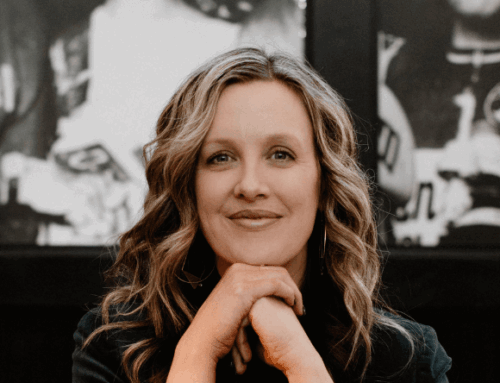
Jess Lindgren is a longtime C-Suite assistant, and host of the Ask an Assistant podcast.
In this Ask an Assistant spotlight episode, Jess talks about the Start, Stop, Continue framework and how it can apply to evaluating internal events for your organization.
CONNECT WITH JESS
- Jess on LinkedIn
- Ask an Assistant podcast!
- jesslindgren.com
- Subscribe to The Leader Assistant Premium Membership to join Jess for her weekly live call – The Monday Club!

ABOUT JESS
Jess Lindgren has worked in the C-Suite of organizations great and small for 20+ years. She focuses on supporting her current CEO in his many endeavors, improving the relationships between EAs and their Execs, and has very low tolerance for any meeting that should have been an email. Jess hosts the wildly popular* business podcast, Ask An Assistant.
*in her Grandma’s sewing room
–––
THE LEADER ASSISTANT ACADEMY
Enroll in the on-demand, AI-powered professional development resource for Leader Assistants who want to level up. Learn more -> The Leader Assistant Academy.
THE LEADER ASSISTANT BOOK
Download the first 3 chapters of The Leader Assistant: Four Pillars of Game-Changing Assistant for FREE here or buy it on Amazon and listen to the audiobook on Audible. Also, check out the companion study guide, The Leader Assistant Workbook, to dig deeper.
JOIN THE FREE COMMUNITY
Join the Leader Assistant Global Community for bonus content, job opportunities, and to network with other assistants who are committed to becoming leaders!
THE LEADER ASSISTANT PREMIUM MEMBERSHIP
To learn more about how you can join growth-minded Leader Assistants, check out our Leader Assistant Premium Membership for ongoing training, coaching, and community.
LEADER ASSISTANT LIVE EVENTS
Check out our constantly updated schedule of events for admins and assistants at LeaderAssistantLive.com.
SUBSCRIBE
Subscribe to The Leader Assistant Podcast so you don’t miss new episodes!
You can find the show on Apple Podcasts, Spotify, Google Podcasts, Pandora, and Stitcher.
Join my email list here if you want to get an email when a new episode goes live.
LEAVE A REVIEW
If you’re enjoying the podcast, please take 2 minutes to rate and review the show on Apple Podcasts here. Each review helps me stay motivated to keep the show going!
–––
EPISODE TRANSCRIPT
Jeremy: 00:46
Hey friends, it’s Jeremy Burrows, host of the Leader Assistant Podcast. Thanks for tuning in. Today I’m actually excited to put the spotlight on my friend Jess Lindgren’s podcast called Ask an Assistant. Jess takes questions from you all and then answers them on the Ask an Assistant show. So be sure to go to AskanAssistant.com to check out more episodes and submit your questions for Jess. I hope you enjoy this spotlight episode of the Ask an Assistant show, and we’ll talk to you soon.
Speaker 2: 01:21
The Leader Assistant Podcast exists to encourage and challenge assistants to become confident, game-changing leader assistants.
Jess: 01:51
I’m your host, Jess Lindgren. Let’s get to work. Today’s question comes to us from esteemed colleague Martin, who wrote in via askanassistant.com. Hi Jess, I have been tasked with developing a new way to evaluate internal events after they happen from an event planning perspective. This is a regular event series that happens once a month. Do you have a method that you can recommend? There are too many to choose from, and I’m feeling overwhelmed. Hey Martin, I really thank you so much for writing in. I do have a very simple framework that I like to use and it can be applied pretty broadly in the workplace. It is called Start, Stop, Continue, and it truly can be, it’s not always, it can be, uh, as simple as it sounds. Um, I did ask the internet giving credit where credit is due. It told me that Phil Daniels, a psychology professor at Brigham Young University, is credited with creating the start-stop continue technique. Um, way to go, Phil. I use this all the time, and loads of people around the world do too. Uh, in a nutshell, what new ideas or processes or whatever, like what new should we bring to the table based on how the event went? What should we start doing? You know, what did we forget? What did we maybe during the event something came up like, oh, something that somebody said or did really spark this great idea? What came out of the room? What came out of the team? What should we start doing after we’ve already produced this one event? Um, what didn’t work that we should stop doing? Again, what came out of the room? What wasn’t used? What didn’t go over well, what wasn’t interacted with? Um, what kind of things do you need to stop? Um, you know, because maybe they take up time, effort, energy, money, space. All of these are considerations for th things that you can stop doing. Uh, and what worked well, or at least didn’t fail, that we should continue doing, you know, just because it something doesn’t have to be like a rousing success um to be continued with. You know, it should at least have a baseline of like this was good, this was effective, um, but also continuing like what are the things that people really loved? And even with those things that people loved, there is a degree of starting and stopping. You know, maybe there’s a way to make that thing that people loved even better. Maybe there’s a way to make that thing that people loved uh less expensive, you know, there’s a way to stop doing something in there. So I really do think the start, stop, continue is a very versatile tool uh in the workplace and something that I even use in my personal life, to be honest. Um, it really is that simple on the surface, but if you are going to implement this kind of feedback structure, um, bear in mind that not everyone will necessarily feel the same way. Uh, the thing that maybe you thought was a total bust might have been a wild success from someone else’s perspective. Um, plus, change is hard. Like if you’ve always been doing things the same way because that’s how they’ve always been done, and trust me, we have all worked in those workplaces. Um, even a start, uh, a simple start, stop, continue format for feedback can feel aggressive or daunting. Um, I really love to hear that your team is at least considering an evaluation tool or process. Um, it’s a great place to start. And I really hope it goes well for you. Um plus evaluating the events that you produce is a really great way to make sure that you’re not reinventing the wheel. Uh, doubly so when it’s for a regular and recurring event. Like there should be some things that are just kind of on autopilot. You book the same space. That’s an example of something that, like, if we’re gonna do the start, stop, continue just for this fictional example, um, we’re gonna continue using the same space that the event was in. So book that space, you know, if it’s an internal conference room or meeting space, just book it. You know, it’s on the third Thursday every month, book it for the rest of the year. You continue. It’s something that you just always will have as part of your event structure. Um you bought coffee that nobody liked. Stop buying the coffee nobody likes, buy a better coffee, you know. Um, continue. You had really nice pens at the event. Continue to buy and provide the same nice pens. Like, again, very versatile framework and stuff. There should be a lot that you can just set and know that it’s going to be the same for every event from here on out, um, especially for your specific circumstance where it’s a regular recurring meeting. Like just make it as easy as possible so that you can focus your creative efforts on literally anything else. Um, definitely know your audience when you’re trying this style of feedback. You know, don’t come to the meeting and just blurt out like things sucked or they were terrible. Phrase them, I don’t want to say delicately because this is a workplace and it’s really nice when you work on a team or in a company where it’s okay to be direct, but definitely be diplomatic. That’s the word I’m looking for. Not delicate, be diplomatic. Um, instead of saying something like, you know, oh, the menu that we chose for lunch sucked, be specific. Hey, everybody, I noticed that nobody ate the beef. We ran out of chicken, and we didn’t refill coffee stations quickly enough. Like those are specific, actionable, they’re things that you can plan ahead for next time. Don’t order the beef. But of course, next time when you don’t order the beef, everybody’s gonna ask where the beef was. Um, but you know, don’t order the beef, order more chicken since we ran out and we didn’t refill coffee stations quickly quickly enough. Maybe we need to buy another air pot. Maybe we need somebody who’s just dedicated because it’s an internal event. You’re not necessarily working with an external venue. Um, maybe you need just a dedicated person who is only filling coffee to keep everybody going for these events. Again, specific, actionable things that you can plan ahead for the next time that you produce this event. Um, personally, I happen to be in an extremely lucky position. Uh, my executive is super open to feedback. And even when there’s something that he thinks is a great idea from his perspective, um, usually because something went wrong, but I made it work, uh, he always is very open to knowing how much effort went into making something work and can always be persuaded that the extra time, effort, money, whatever it is that I invested in making something work, if it wasn’t worth it from my perspective, like he’s totally open to knowing why and like why it wasn’t worth the end result. Um, plus, it’s just the two of us. Like we’ve been working together for a long time. Um, after all these years, he trusts my judgment ideas and feedback implicitly. And again, I’m just so lucky, so grateful to be working with somebody like him. And um yeah, just count my lucky stars every time that we put on an event and have a little feedback session afterward. Um, I did think of an example, continuing off my menu idea above, you know, about chicken beef, whatever. Uh, back in like 2016, gosh, really early on working together. Um, we used to run events at a venue that was super close to his home. Um, it was a country club. He really wanted us to have plated breakfast and lunch, but it was a huge logistical headache coordinating meals ahead of time. If you’ve ever planned a wedding, like something where people need to have their chicken or beef selected ahead of time, where you have to work with the event venue to say, okay, these are the seasonal vegetables on offer. I guess we want this one, like a super huge logistics thing to track down every single person who’s attending these things, check off did they get the menu that they wanted? And then making a seating arrangement, honestly, like, okay, person A is at table one, person B is at table two, and telling the catering staff, like, here’s where the people are sitting and here’s their menu selections, like just basically a mini wedding every time we ran this. And on top of that, service was either way too early, way too late, um, or because we were a smaller event, you know, we were still like 20 to 25 people, but they might only give us one server. And if you’re doing plated service for something like that, and you have everybody split up between like four or five, five top tables, like service would take forever. And after we ran the event a couple times, um, I just asked my exec, I was like, hey, would you be open to a buffet style meal? Like the plated is super fancy, everybody loves it, but you know, based on the content that you’re teaching, it doesn’t always end at exactly the same time. And like maybe QA ran long, or maybe you just drilled down really hard in one section of the material. Um, doing buffet is great because then like the staff isn’t waiting on him to finish his content and this the food is sitting in the kitchen getting cold, or he finishes super early and there’s still a half hour before all of our plated meals are ready. Like it was great. Um, just knowing that the staff could come in. Like, I worked with the team to have them set up the buffet a little bit on the early side. Um, because you can always leave trays of stuff covered and with the little heat dishes underneath. Um, they could set up the buffet super discreetly at the back of the room while he was wrapping up the content, or if you know, food was still gonna be a few minutes, like things were he wrapped up a little early. It was a beautiful country club property in San Diego. Like people gladly would step outside, take a little break, take a little stroll around the property. Like it was fantastic. And then once the buffet spread is set up, everyone can take as much or as little as they want. You’re not getting an exact headcount for like who wants the chicken, the beef, or the fish. You just have one or two protein options, one or two main items, and everybody just gets to pick and choose. Um, we will talk about this in a future episode in terms of like drilling down on catering things, but like even in this instance, I would always work with the country club to get croutons and cheese on the side, you know, then if somebody’s gluten-free, they can still eat the salad without taking the croutons. If they’re dairy-free, dressing is on the side too. You can take lettuce, you can take the croutons, you’re not gonna take the cheese or the dressing. Like it was just so much more flexible, um, better for the uh, better for everybody, you know, it was better for the venue staff, it was better for our students at the course, better for my exec. Like I got great feedback from everybody. And the more we did these events and the more things were successful with little tweaks here and there, our start, stop, continue format, um, it just continued to build trust between me and my executive as a result. And again, it was just a quick little start, stop, continue conversation. Like, let’s start doing buffet setup because it’s more flexible for the event staff, it’s more flexible for our students, it’s less work for me. Um, let’s stop doing the plated meals. It was just a big logistical nightmare and timing in the room was tricky. And let’s continue at the same venue because the location is great, the food is tasty, and the price is right. Like, again, this was 2016. So who knows what running an event at that venue would cost today. But at the time, it just really checked all the boxes that we needed. And again, our feedback, our start, stop, continue, it’s actionable, it’s simple, it’s straightforward. And, you know, my executive and I didn’t have to take a seminar to learn how to give and receive feedback like this. Um when implementing this or honestly anything in the workplace, your mileage will vary. Like there’s just no ifs, ands, or buts about that. You’re always gonna have people who are resistant to change, who don’t like learning new things. I am certainly guilty of that in my own ways. Um, but if you can get everybody on board for this, I promise it’s a super worthwhile format to try. And it’s something simple. You’re not constantly changing your evaluation rubric. Like you just have a cute little meeting afterward and say, okay, what what went well, what didn’t go so well. Start, stop, continue, everybody. Let’s do it. Uh, while I was thinking on this episode, I did do a little bit of digging. Um, found several articles about why you should not use this format. Uh, many of which seem to be surrounding regular use of this format. Um, you know, so for like a daily or weekly retro, especially, is where I’ve seen this. Um, and that falls into a realm that is not relevant to me. Um, I don’t work in like a software tech environment. Um, like my husband does. He talks a lot about being a software developer and having retros about a lot of things, you know, daily, weekly, monthly, quarterly, project-based, annually. Um so a lot of people talked about this format being easy to burn out on. Um, it’s too predictable, it’s too boring. Um, there are plenty of ways to jazz this format up. Um, but the overall consensus seems to be that by and large, a lot of those jazzy suggestions are basically just slight variations on the same start, stop, continue format. Um, in my personal experience, like I say, I haven’t used this on like a okay, daily, weekly, you know, super regular basis. Um, but in my personal experience, when I’ve used it for different projects or like for similar events that don’t happen all the time, like the event that I talked about that my executive and I used to do, we were doing this like once every six to eight weeks, you know, just far enough between that we could always, we we always had something to stop. We always had new ideas, we always had things that were just like, hey, venue’s great, staff’s great, food’s great, we’re not even gonna touch it. Um, you know, so it just it is a worthwhile feedback uh structure to at least look at. It’s simple, it’s effective, and it will get the job done. Um, to everybody listening, I want to know what are your thoughts about start, stop, continue as a, you know, in this specific example, an event evaluation tool. Uh, are there any other formats you’d recommend? Is there something like you just really feel strongly? Like a start, stop, continue session still just like lives rent-free in your head because it went so poorly. Like, I hope that’s not the case. But if you really have some strong, passionate feelings about another format, I am all ears askanassistant.com always and forever. I want to hear from you. Uh, lay your thoughts on me, and uh, until next week, take care.