Diana Brandl is a longtime C-Suite assistant, and host of the Executive Office Insights podcast. In this spotlight episode, Diana interviews Reggie Love – former Personal Aide to President Barack Obama.
The conversation features Reggie discussing his life, career, and time at the White House. He shares his background growing up in North Carolina and his path to working with Obama, emphasizing the importance of diversity and inclusion. He also offers leadership advice centered on passion, patience, and perspective (empathy), and tips for managing stress.
CONNECT WITH REGGIE
ABOUT REGGIE LOVE
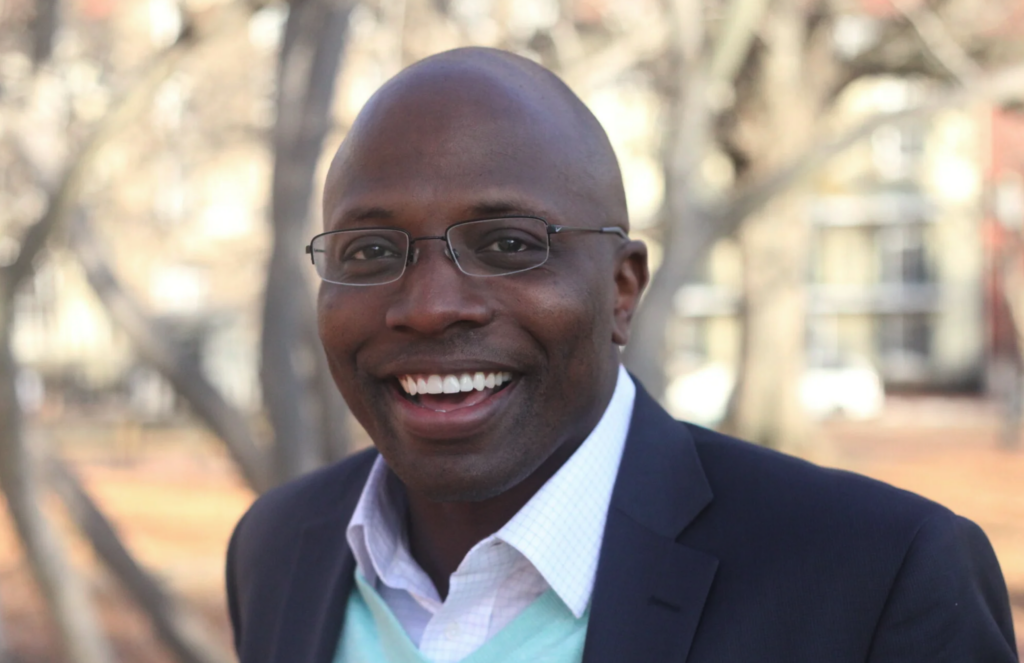
Reggie Love is a New York Times best selling author of Power Forward: My Presidential Education, a collection of stories and lessons from his time in sports and politics. After serving as a personal aide to President Barack Obama from 2009-2011, Love earned his MBA from the Wharton School at the University of Pennsylvania and is currently a Senior Advisor at Apollo Global Management.
ABOUT EXECUTIVE OFFICE INSIGHTS with DIANA BRANDL
Executive Office Insights is a podcast for executive support professionals hosted by Diana Brandl – an accomplished trainer, consultant, coach, and former C-suite senior executive assistant with nearly two decades of experience at renowned international companies, this podcast dives deep into the evolving world of executive excellence.

Diana explores the critical themes shaping the modern workplace, including leadership dynamics, digital transformation, AI, and the future of work. Featuring insightful conversations with a diverse range of German and English-speaking experts, each episode equips listeners with actionable insights and strategies to thrive in the ever-changing executive office landscape.
–––
THE LEADER ASSISTANT ACADEMY
Enroll in the on-demand, AI-powered professional development resource for Leader Assistants who want to level up. Learn more -> The Leader Assistant Academy.
THE LEADER ASSISTANT BOOK
Download the first 3 chapters of The Leader Assistant: Four Pillars of Game-Changing Assistant for FREE here or buy it on Amazon and listen to the audiobook on Audible. Also, check out the companion study guide, The Leader Assistant Workbook, to dig deeper.
JOIN THE FREE COMMUNITY
Join the Leader Assistant Global Community for bonus content, job opportunities, and to network with other assistants who are committed to becoming leaders!
THE LEADER ASSISTANT PREMIUM MEMBERSHIP
To learn more about how you can join growth-minded Leader Assistants, check out our Leader Assistant Premium Membership for ongoing training, coaching, and community.
LEADER ASSISTANT LIVE EVENTS
Check out our constantly updated schedule of events for admins and assistants at LeaderAssistantLive.com.
SUBSCRIBE
Subscribe to The Leader Assistant Podcast so you don’t miss new episodes!
You can find the show on Apple Podcasts, Spotify, Google Podcasts, Pandora, and Stitcher.
Join my email list here if you want to get an email when a new episode goes live.
LEAVE A REVIEW
If you’re enjoying the podcast, please take 2 minutes to rate and review the show on Apple Podcasts here. Each review helps me stay motivated to keep the show going!
–––
TIMESTAMPS
00:00:00 – Introduction and Show Notes
00:00:50 – Meeting Reggie Love
00:01:22 – Reggie’s Role with President Obama
00:02:14 – Reggie’s Background and Career
00:04:36 – Growing Up in North Carolina
00:08:07 – Transition from White House to Corporate World
00:13:08 – Diversity and Inclusion
00:17:00 – First Day Working for Obama
00:21:04 – Challenges and Learning on the Job
00:26:22 – Empathy and Leadership
00:32:38 – Tips for Assistants on Leadership
00:36:11 – Coping with Stress and Relaxation Techniques
00:40:01 – Basketball and Favorite Teams
00:41:26 – The iReggie Story
00:44:16 – Current Music Preferences
00:45:44 – Plans and Reflections on North Carolina
00:47:32 – Closing Remarks and Gratitude
00:48:50 – Final Thoughts and Recommendations
EPISODE TRANSCRIPT
Jeremy: Hey friends, thanks for tuning in to the Leader Assistant podcast. I’m excited to share another spotlight episode of my friend Diana Brandl’s show, Executive Office Insights. Be sure to check out the show notes for more information about her show and today’s featured guest. But in the meantime, enjoy this conversation and keep leading well.
Jeremy: You can find all the show notes for this episode at leaderassistant.com/371.
Diana: I’m very excited to share this interview with you. I got to know Reggie Love the first time a couple of years ago when I joined one of his talks, and I was super fascinated by his biography. And then my dear friend John Shaw introduced him to me as I was sharing my wish that I would love to do a podcast with him as well. So here we are, very thankful that Reggie gave me time out of his busy schedule to talk to me about his life, about his career. Of course, been asking quite some questions about the time he spent at the White House working as the personal aide to President Barack Obama from 2009 till 2011. He was responsible for assisting with the coordination to completion of the president’s daily schedule, as well as coordinating with other White House offices to set up long and medium range planning. But he has been working for Barack Obama already when he was a senator. So they have been a great team together for quite a while. And of course, he’s sharing some of those wonderful stories with all of us. I’m very honored to introduce the wonderful Reggie Love to you all. He’s now working as a senior advisor at Apollo Global Management. Please enjoy. Welcome everybody to the podcast, The Future Assistant, a podcast full of inspiration, encouragement, and empowerment for administrative professionals. Tune in, level up, and get motivated by the stories you are about to hear. All right, everybody. Very honored to be here today with someone who’s tuning in from D.C. Good morning, Reggie. How are you? And what time is it over there in D.C.?
Reggie: Good morning. It’s not too early. It’s only about 7.40 in the morning.
Reggie: Thanks for having me this morning, too.
Diana: Absolutely. So would you say you’re an early bird or always getting up early?
Reggie: Yeah, I think that I definitely am up early. I don’t know if it’s conditioning or if it’s like something that I don’t believe I was born that way. When I was in high school, I used to have to get up at 5.30 in the morning to be out of the house by 5.45 to beat the traffic to get to school because I went to school across town. And so if I left before six o’clock, I could get there and in 40 minutes. But if I left after six, it would take like an hour and a half. And so, it started in high school. And then when I was in college, we used to have summer workout or lifting sessions or conditioning session that would start before classes. And so like if your first class started at 730 or eight, like you usually were like in the track or in the gym by like six or seven. Um, and now it’s like, you know, uh, I, You know, it’s not as bad as not being able to sleep through the night. But, you know, I kind of wake up after five hours of sleep every day. But if I wanted to, I could go back to sleep. So that is the beauty of it.
Diana: Sounds good. I have to admit, I do have a hard time being an early bird sometimes. But yeah, it’s all about routines, right? Reggie, I’m very honored to have you on the show today. Why don’t you tell us a little bit about yourself? Who’s Reggie?
Reggie: Yeah, I mean, I like to say that there’s a lot of narratives about me and some of them are a part of what has been written by press or by my former boss, Barack Obama. I think that some of the misconceptions are that I somehow was just like a great basketball player or somehow I was this deeply politically connected person that had worked for Obama for decades before he ever got to the US Senate. But for me, I’m just like a kid from the South. I grew up in North Carolina. You know, my parents, I like to say I won the parent lottery. My mom and dad, I’ve been together for almost 47 years. And, you know, I’ve got parents that have just really, you know, put a lot of love and prayer and effort into the development of me and my brother. You know, and I think for the, for the, for the most part, uh, I like to believe the biggest piece of it is that, you know, I just a kid that got, I got a lot out of the game of basketball. Uh, I never had the chance to, um, to really be a professional basketball player. Uh, but I feel like, you know, my, my closest friends, um, all come from, you know, either. AAU basketball, which I don’t, I’m not sure if that’s, it’s kind of like club soccer where you would see in Europe.
Diana: Exactly.
Reggie: Um, and so, uh, AAU basketball, uh, the teammates that I had in college, uh, playing at Duke and, and, and now as an adult, um, you know, some of my closest friends have, you know, are folks that I, I played basketball with on the campaign. Um, like Barack Obama and and guys that I still, you know, try to play basketball with now. Uh it’s been a little uh hard to get a good basketball game then uh because of COVID. Um but you know uh just a a kid who who grew up loving the game and uh I always joke uh that I never got a chance to um play professionally, but I got so much out of the game because, you know, here in the United States, you know, school’s really expensive, right? So, I mean, we pay like roughly, you know, if you go to like a non-state sponsored school, you know, you’ll pay about 50 to 60,000 bucks a year for a four-year degree. And so, you know, I got into a really good school, I got it paid for, and I got to, you know, build you know, a relationship with the leader of the free world through, mostly through the game of basketball. So, you know, that’s kind of me in a nutshell. I’m at a network for Apollo Global Management, which is a large private equity shop out of New York that’s focused on sort of traditional private equity and credit in the alternative investment space. I’m a senior advisor there now. And yeah, and I think, and I’ve been there for about two years and have been focused on a lot of the issues around human capital, diversity, equity, inclusion, and government affairs.
Diana: So how was the transition actually coming from the Obama administration going back into the corporate world? Was it hard for you or was it just a nice change? Did you enjoy it?
Reggie: The irony for me is that, one, I had not really worked in the corporate world before leaving the White House in 2012. I came to D.C. right when I got out of college, and I think I had in my mind that I was going to go work for a bank. But when I was In the period in time in which I was waiting for the job to start and the training program to start, I was actually thinking about going to Goldman Sachs. I found myself in Washington, D.C. at the suggestion of my mother, who had said, why don’t you get an internship or do something productive with your time? Until the job starts, I had just left Dallas, where I’d been playing outside linebacker for the Dallas Cowboys. And so my mom kind of felt like, you know, I was too young to be retired and too young to be playing golf every day in North Carolina. And so I went to D.C. A friend of mine, Sean Richardson, was the chief of staff for then for Patrick Kennedy, who was the junior. I was a senior congressman from from Rhode Island. And He knew Mindy Myers, who lived in the basement of Pete Rouse. And Pete was the chief of staff for Barack Obama at the time. But, you know, Pete was sort of a statesman of the U.S. Senate. He was kind of known as the 101st senator. He had been the chief of staff to Tom Daschle when Tom Daschle was the majority leader in the Senate. And when I came to D.C. to interview for, you know, a staff position, a staff assistant position, you know, I kind of fell in love with, with DC and, and, you know, one of the things I kind of really recognized in DC at that time was that, you know, you know, Barack Obama was the only African American senator, so one of 100. So, he represented 1% of the US Senate as a person of color. And as you looked at the staffs of these members, they looked very much like the member. And so you had really you had a dearth, a lack of diversity on the staff level. And my general assumption was, you know, how do you have a political system that works for all people if the people that, you know, are in representative government don’t, you know, look like the people that they represent or trying to represent it? And so and really, that was like one of the the factors that kind of drove me to wanting to, to spend the time that I’ve spent in Washington DC because, you know, When policies don’t work, they often have a multiplier effect on those people who have less access to capital, right? And so if I live in a neighborhood where, you know, my school’s a little run down and my budget for that school was a little skewed because the property taxes are lower or, you know, they haven’t gotten around to updating the school. If I have access to capital, I can easily put my kid in a car, send them across town to an independent school or a private school or some parochial school. Whereas if I don’t have access to capital, I’m stuck with whatever mobility options are in front of me. And so if someone doesn’t have that perspective or recognize it, and I don’t know if this is a thing in Germany, but here in the US, you’ve got these massive disparity gaps between wealth and between income as you sort of segment the population between white, black, Hispanic, Asian, and African-Americans. You know, historically have sort of have skewed toward the lower or towards the higher gap and sort of the lowest. income levels and the lowest wealth level. So I think that that was one of the things I noticed at an early age. And I laugh about it all the time. And no one’s really going to understand this phrase. But when I grew up in Charlotte, and I just mentioned my parents, and I’ve got two phenomenal parents, but my parents never really made a bunch of money. They kind of were You know, they made like they were, you know, middle income kind of families. My dad worked for the government. He worked for the Office of Social Security, which is sort of like a, you know, like a benefits office. And so they were responsible for paying uh, out, uh, payments to individuals who had either disabilities or who had retired and had sort of paid into the social security program for years and sort of now retire, um, eligible for these benefits. And so my dad and mom, um, you know, they, I grew up feeling like we were wealthy and, and I mentioned that school that I used to drive across town to go to, which was an independent school called Providence day. a great high school, but at that point in time, cost more than what my family could really afford. I think now it costs about $26,000 a year for high school. And I was lucky enough to go to the school. Now, we did not pay full tuition. The biggest tax was probably having to get there. But the thing that I realized was that, you know, there, there was so much more opportunity and so much more. Well, on the other side of town and, you know, and I told my friends I was like, I didn’t realize that. that I didn’t have much until I got to Providence Day. And it’s funny because I had said to myself, you know, how do so many people have so much stuff and none of them play for the Hornets? And the Hornets were the professional team in town at the time. Because I kind of grew up thinking like, you know, you only really got to be wealthy if you were, you know, an entertainer or an actor or an athlete or whatever. sort of the community that I grew up in. So, yeah.
Diana: Such great information you’re sharing with us already, Reggie. Thankful for that, giving some insights how you grew up and what was important for you back then. And I’m glad you’re bringing already the topic about diversity and inclusion because this is the number one topic that needs to be on the agenda everywhere. And I’m glad to see that a lot of assistants are out there pushing this topic, bringing it on the agenda when they talk to their executives, when they talk to their HR people, what impact they might have in an organization. Because it’s a topic that needs to be addressed from all levels in an organization, not only from the management, but from all levels. So I’m glad to see that when I speak to assistants, not only in the big corporates, but everywhere out there, who say, this is really important for me, and I really want to have a voice when it comes to diversity and inclusion. So thank you so much for bringing this topic already, because it’s so relevant. Looking back at the time with the Obama administration, you held various functions and one of them was the personal assistant to the former president. So do you remember how the first day was when you actually started working for him? How was it like? Any nervousness in you or was it just like, hey, that’s my job and I’m going to be good at this? And it’s just an executive for me, right? It’s just how I see it, maybe. How was it? Do you remember the feeling back then?
Reggie: Yeah, I mean, look, I’d say there were kind of really sort of three phases for me in which I sort of went into sort of a new version of a role. And all of those roles were, in theory, working for then either Senator Obama or President Obama. And when he was a junior senator from Illinois, I remember the day that I started there. My friends give me a hard time because I think the night before, I laid out the suit that I was going to wear, and I had ironed the shirt, and I had shined my little Cole Haan shoes. And I remember that day vividly because it was such an eye-opening experience. And I got the chance to meet so many different people on the Obama team. And the thing that I had recognized is that he had brought together such a diverse and talented group of people to work for him when he was a junior senator from the state of Illinois. And then I remember the day in which, you know, the campaign began and I was his special assistant or body guy or whatever people refer to it as and, you know, and, and for the most part. You know, it was extremely stressful, not because of the task of the job, but really the uncertainty. You know, there’s no manual, there’s no, you know, script to follow. You know, you really are just sort of reading and reacting in terms of what is working and what is not working. And I think that sometimes it’s hard because you know, you’ll do things that don’t work, right? And not to any fault to yourself, but you know, you don’t have all the information, you don’t have all the the context to be able to make decisions that in theory are always valuable to the candidate or to then Senator Obama, because you’re young or I was young and I did not know a whole hell of a lot. And I think that that was a little bit terrifying. mainly because in life we all spend time like training, preparing, you know, especially like in sports or in school where you’ve gone through this organization or this team or this class and you now are like the king of the hill and you’ve mastered it, right? And to then be thrown into a place where you’re now no longer at the top of the hill you actually have very little relevant context or information because you have not had those experiences, those specific experiences to give it to you. And so I think that that is a challenging place to be in, but it’s humbling. And I think if you have an open mind and an open heart and If you are willing to be vulnerable. I think you’re able to really grow in those roles in an effective manner. I think a lot of that comes from the concept of like you know, uh, eating a piece of humble pie and saying, Hey, sir, you know, look, I know that you just explained this to me, but I have no idea what you were talking about right now. Could you just give me a little bit more context? Um, and, and I think that that is often a hard thing to do, but I think especially as a man in the United States, uh, to kind of, um, to come back and to say, you know, Hey, look, I don’t have the answer right now, but I’m gonna, I will go down and I’ll track it down for you. And that actually was what a lot of the job was for the first few weeks was what was, let me get back to you on that. I’m going to have to go do some research.
Diana: Yes, absolutely. Speaking of like having a routine and this job is almost impossible, I believe, right? Like, okay, kind of planning the day, but then they’re going to be a lot of things mixed up, right?
Reggie: Yeah. And I remember when when Obama was first, the first couple of days in the White House, President Obama and I, he would ask me these questions about stuff. And one day there was this big envelope on my chair and outside of the Oval Office and it was 50 pages and it was a bill for like $30,000. And I was like, And I’m like, going through the bill and I’m like, I’m so confused as to what it is. And so I just, I pick up the phone and the guy who had the job, who had my job for President Bush, ironically went to Duke, a guy by the name of Jared Weinstein is a great young man. He’s a couple of years older than I was. And at that point in time, he was at Stanford Business School. And I called him and I said, hey, the admiral just dropped off this bill here. And he said, well, how much is it? I said, it’s like $30,000. And he goes, yeah, that’s about what it was for the Bushes when they were at the White House every month. And I was like, oh, that’s helpful.
Diana: Oh, that’s so funny indeed. But I’m glad you had a good network, right? To reach out and ask for like, okay, what’s this here? So I must say, I’m really enjoying the book Barack Obama wrote. And I saw your name in there quite a few times, along with some pictures, playing basketball, being on the road, of course. And in the book, I read that he calls you his little brother. So what did you actually enjoy the most while working for him? And where did this name come from?
Reggie: Yeah. So not to plug the book, but I did. I listened to the book on audio. I thought it was well read, enjoyed every minute of it and definitely was like a trip down memory lane on some really some some great quote unquote adventures. I think like I think when you spend so much time with someone, two straight years on a presidential campaign, three years in the White House, it’s almost like Stockholm syndrome. And once you start to identify with your capture. And I’d say for me, look, I’d say the job of working for Barack Obama as a special assistant and personal aide, I think was, a couple of things. It did not require, um, you know, a PhD in neuroscience. Right. Um, but it, it did require, you know, a lot of patients, a lot of empathy, uh, and, and the ability to, to, to pick up information and involve and to, um, into learning grow. And I think for me at that point in time in my life, I think it was a, a very important, um, uh, growth experience for me. Um, you know, I think that, you know, I, I very much, uh, did not have the ability to, uh, to be empathetic. I don’t think I was very good at, um, really, um, taking in specific moments. You know, I think when you’re young, you’re always thinking about next play, next play. I think I learned the ability to, you know, to really to pause, take a beat, self-assess, reassess, really think about what is happening at that point in time and less from an emotional point of view and more from a realistic point of view. And then I think I think the biggest piece is that in this evolution, I got to see the country and the world. And I’d say that was really important for me, especially in this point in time in which we feel like the world is so split and so bipartisan right now. And so I mentioned that because you know, what you find as you look across this country and the world is that everyone kind of cares about the same thing, right? Like they want to have an opportunity to work and make an affordable wage. You know, they want to be able to put food on the table. They want to be able to have healthcare. They may want to be able to take a vacation, you know, and retire with dignity. And, you know, and it didn’t really matter, like, the country, the language, the color of the state, you found those things to be pretty true everywhere around the world. And I think those things, like, give me a lot of hope when I think about how divided we kind of express the world to be today. And I don’t believe that those divisions are as big as they are. But I do think, you know, as we talked about earlier on the show, I do think a lot of these challenges are driven by, you know, income inequality and access. And so and and we as a country and we as leaders need to think about, you know, how to make sure that people have enough to be hopeful and to believe that, you know, the German experiment, the American experiment, the EU experiment, you know, is something that’s worth buying into. And that is something that, you know, if abided by, will create, you know, opportunity for individuals and for their families and their communities. And so I do think that that was the biggest thing that I learned. on the process. And then I think what I learned specifically from him was empathy and always being able to think about, you know, not only from a campaigning, fundraising, policy point of view. But just in terms of as we think about the conversations that we’re in in our day-to-day grind, where is someone else coming from? And how is the world impacting them? And why is it not necessarily trying to validate why people feel the way they may feel, but trying to understand the root causes that have created those feelings. And so I tell the story, you know, I remember when, and I’m not sure if the listeners on this podcast are old enough to remember, but the last crash in 2008, and eight and nine, right when Barack Obama had won the 2008 election, we’d come in and we had the housing crisis, we had the automobile crisis. And while campaigning for president, he was having a bunch of calls with President Bush And they were trying to pass what was now known as TARP, which is the Troubled Asset Relief Program, which was a federal stimulus package to help save the baking industry. And I had said to him, because, you know, we’re, you know, I remember we were in San Francisco, we were just driving across the Bay Bridge. And, you know, this is a third call he’s had with President Bush that day. And, you know, what was a true bipartisan effort during the middle of a presidential campaign with the Republican president to try to come up with bipartisan support for this bill? And I had said to him, you know, look, sir, I’m confused because, you know, if you were president, Um, I don’t believe the Republicans would work, uh, this hard, uh, to try to get something passed. Um, and especially before the election, you know, like in theory, like if nothing gets passed, wouldn’t it be really good for you and this campaign, which you’ve been campaigning for, for the last 20 months, uh, for us, for there not to be a TARP. And he said, you know, Reggie, like, I think it’s a great question. You know, I understand why you think such a thing. And I don’t believe that your your inclination are wrong. But I think what you have not really taken into consideration is who are all the people that would be impacted if TARP does not pass. You know, it may as a whole hurt my chance to become president. of the United States, but it’ll be a hell of a lot painful for all those other individuals who lose access to banking services, payroll services, if we go and spiral into a great depression. And those people who will be most impacted by it will have not been the individuals who were the root cause. And so if that in itself changes the odds of me becoming president.
Reggie: He’s it was like it’s more than worth it. Worth it. And and I don’t think that. many people have the ability to be that empathetic when it comes to other people. And to see it at that level kind of sort of lets, always reminds me that, you know, as tough as I may have it, there’s always someone who may have it a little bit tougher. And so we can never not be empathetic because true impact is what happens to the entire community, not just what happens within your own tribe or your own household.
Diana: Right. And it’s such a wonderful story. And I always say, for me, great leaders, they show empathy. They show emotional intelligence in many ways. It’s not only the technical skills that they bring to the table, but so many other important values are connected to empathy, of course. And you just gave a wonderful example And actually, speaking about leadership, in your speaking engagements, you talk about leadership. And this is a topic that, of course, is relevant for many assistants as well. So when you think of high pressure, tight deadlines, multiple executives, and so much more, the gatekeeper position is not always an easy one, for sure. So what would you say? What are your top tips out there for our audience?
Reggie: Yeah, look, I’d say, you know, not to be corny. I usually I usually talk about passion and patience and perspective and perspective really kind of feels like empathy. And but I think why passion and patience are important, you know, I think and I learned this probably in college. Right. you know, everyone wants to win a national championship. And we were lucky enough my freshman year to, to win a championship. And, and the thing that you often find out is that like, you don’t win the NCAA tournament is played in, in, uh, in March every year, this thing called March madness is a big American to do. And, uh, but in actuality, even though those games are played in March, um, the preparation and the training to be prepared to win those games they happen, you know, a year before that the summer before. And so, and so why I say patience is, you know, oftentimes you’re gonna have to do a lot of work that will not bear immediate fruit or not give sort of immediate gratification but ultimately will be helpful over time. And so you kind of have to be patient about how you do the work. And, you know, you know, what do they say? Work as hard as you would when no one’s watching as if someone were watching. And and and don’t let the immediate things that are sort of don’t let the lack of immediate gratification have an impact on how much effort you put into the work that you do. Yeah. And I think that takes a lot of patience to be able to execute on that. And then I say passion. No, I think that like, you have to sort of believe in the organization and the people that you work for, and that they want to, you know, do something that’s really aligned to the things that you care about. Because, you know, work is hard. And if you don’t have that passion, if you don’t, if you’re not, if you don’t believe the thing that you’re doing, or the widgets, or the cogs, or the policy, or the message that’s being created. I think it can be challenging to get through those valleys. And so I think you’ve got to be excited and really believe that even if the work that you are doing is small, impact of the team and of the organization is worthwhile. That finding the New York Times while you’re traveling through Keene, New Hampshire at 6am in the morning will have an impact on you know, who is the leader of the free world and, you know, whether or not there’s health care. Hard to see those things being correlated, but, you know, I think you got to make those correlations and be excited about those things.
Diana: Yeah, I love that. Absolutely. Fully agree with you and have a passion for what you do. And a lot of assistants do have passion for their roles. And the past year for sure was not an easy one. We are still in the pandemic. And not only assistants were affected, but many assistants were affected. And they do have a hard time, you know, coping with the stress, coping all of a sudden working from home in the remote workplace. So when we talk about pressure and the things that come with a pandemic, of course, how do you think, maybe some of the, well, I would say examples you want to share with us, maybe from your past job, when you cope with stress, traveling a lot, being, you know, availability 24-7 in such a role probably. So any ideas what you want to share with our audience in terms of how did you relax playing basketball for sure I’m sure but any other tips you want to give out where you say this helped me a lot maybe going into reflection mode. meditation, whatever is out there. Because for me, I do meditate. It helps me, especially going through a tough week. I always start meditating in the morning, just to prepare myself to start the day. And I also reflect after I finish the day in order to be grateful for another day with all the highlights and the lowlights. So what did I do in order to relax?
Reggie: Yeah, you know, I think the The biggest thing for me, um, was, uh, sleep. Like how do you turn off to be able to sleep? And what I found was that, um, I would carry a, a spiral, uh, notebook, the size of an index index cards on a spiral notebook. And I would carry it in my pocket. Uh, and I would write down, you know, anything that was on my to-do list or anything that I needed to remember. Uh, and, and what I think that allowed me to do is that, um, you know, when I went to sleep at night, if I ever had like, uh, uh, oh my God, did I remember to do this or this thought that was really important, I would. I would keep my index card on the table next to me and a pen. I would just write it down. And I would like trust in that the spiral notebook had all the information and that I was not going to solve for any of those things while I was sleeping. And so I think just being able to get a night of rest and let my mind be at ease and not try to feel like I’m holding everything, you know, and I also think that that’s like kind of like, what do you call it, how you how you avoid key man risk. How do you have systems that are easily shareable and easily transferable so that if for some reason you’re out or sick or you decide you want to leave or you need to go to business school or whatever, you have effective ways to transfer out of the role so that you don’t feel as though everything is always your responsibility.
Diana: Yeah, absolutely. Yeah, and I fully agree to that because I do the same. I always have something next to me and I try to pencil everything down so it’s out of my head and I can relax and I know I can take care of that tomorrow. So, very helpful tips. So, of course, basketball, for sure, is also helpful. That’s the best medicine, I would say.
Reggie: Well, basketball is only good if you play well. If you play basketball and you play poorly, and then the president is trash-talking you for the next seven days, it’s not always helpful.
Diana: Yeah, well, I must say, because you mentioned the Hornets earlier, I’ve seen the Hornets play against the Lakers one time, which was amazing to see. So what’s your favorite team? Which team are you rooting for at the moment?
Reggie: Well, here in the U.S., we have the NBA playoffs are going on. I, you know, obviously I was a huge Dirk Nowitzki fan.
Diana: I was hoping you’d say that.
Reggie: Germans. It was a bummer to see them get knocked out against the Clippers two nights ago. But the One of the co-founders for Apollo owns the 76ers, Josh Harris. So I’m rooting for the 76ers. They got a couple of Duke guys on the team. Steph Curry, who’s Steph Curry’s younger brother.
Reggie: And then Elton Brand, who also was an ACC player of the year, went to Duke and played in the NBA for 12 years. He’s a general manager for the Sixers. So I’m rooting for Embiid and Ben Simmons to beat the Atlanta Hawks in this series.
Diana: I mean, we’ll see what happens, I would say, huh? But I must say, I’ve also enjoyed watching Dirk a lot. I remember being in Dallas in the American Airlines Arena. And it was just phenomenal to see the crowd, you know, rooting for this German guy. And what a career, what an amazing career. So we’re all very proud of this guy. So Reggie, we’re coming to the last question. And how can I not ask about the iReggie? So the story has been told so many times by your former boss, it’s everywhere. So he enjoyed the music, you put him on the iPod, right? So what was your special trick? And I’m even more curious to find out what’s on your special music list at the moment. So what are you listening to?
Reggie: Um, well, uh, well, I think the, the story really, uh, came about when during the campaign, he had met with Jay-Z and, and Beyonce and he had not, he, after the meeting, he realized he was like, you know, I don’t actually don’t know what Jay-Z’s top songs are. Could you put five on to my iPad? I’d like to just sort of check them out, you know, for me. And I was like five, I was like, how can I only pick five?
They’re all good, right?
Reggie: There’s so many great songs.
Reggie: And so, uh, I had put the, I’d put on, um, um, five songs and he kind of said, Oh, these are good. I should have a couple more. And that came, that became this whole exercise of, you know, uh, him, um, sort of being kept up to speed with pop culture through, uh, some of my, uh, music, uh, taste and, And then when, um, you know, the iPad came out, someone asked like, uh, him, you know, are you going to get the iPad? And he said, well, why would he get an iPad? I have, I got an iReggie because at that point in time, you know, I always kind of had the internet on my, you know, on my Blackberry, on my sidekick, I grabbed the papers, you know, the magazines, the iPod, the, you know, And then when I left to go to finish up my MBA at Penn, he got an iPad. And I think the moral of the story is that the iPad was quite more effective and cost efficient than I ever was. But I think that he enjoyed hearing about my escapades more than the activities that the iPad got into after the workday.
Diana: That’s amazing. So what’s on your list at the moment, Reggie? What are you listening to?
Reggie: Yeah, that’s a great question. You know, I have, you know, I’ve been on a kick. I’ve been listening to a lot of NPR. Good choice. But I’ve also been listening to just some global artists. I love some of the Spanish artists. And some of this K-pop, the song Lo Siento, which is a little bit older, with like the Super Juniors. You know, it’s just like a lot of crazy stuff, man. Some gospel music. I’m trying to think, what’s my favorite? I love The Baby. He’s from North Carolina.
Diana: Oh, yeah. A local supporter, of course. Good.
Reggie: And then you’ve got, and obviously, um, you know, uh, Adele, like, I don’t know if she’s has anything, she has something that came out last year or something, but I’m like, you know, she can’t make a bad song.
Diana: Absolutely. Even the older ones are great. I agree. That’s fantastic. And speaking of North Carolina, any plans going down there anytime soon? Yeah.
Reggie: Yeah. Well, you know, coach K is retiring and I don’t know if you saw the news last week. It was, you know, a big to do. So, uh, we’ll definitely spend a bunch of time down in North Carolina, uh, uh, enjoying his last season. And then, you know, my hope is that I’ll be back there living there and the next year or so as well. Uh, you know, it’s a little cheaper. Oh, yes, it is a little warmer. Have you spent much time in the Carolinas?
Diana: Yes, I’ve been living in Virginia, actually, because that’s that’s a funny story. I mean, I’m very familiar with the D.C. area because I used to live on the Virginia side, Fairfax area. And when I was an au pair in 1998, 1999, it feels like ages ago and feels like, oh, my God, I got old. But this was my first encounter with the U.S. After I finished high school here and got my degrees, I wanted to see the world, and I decided to become an au pair to stay with a family in the D.C. metro area that both worked for the CIA. And it was quite interesting to be there for the kids.
Reggie: probably made for a very interesting dinner conversation.
Diana: Oh, I can tell you that. I can tell you that. I’ve been over in Langley also, and so quite interesting. But ever since then, I kept in touch with them, and they are actually moved from Virginia to North Carolina to the Raleigh-Durham area, which is very lovely. That’s great. I’ve been traveling throughout the East Coast and I hope I’m going to be back to the U.S. soon. So it’s, as I always say, my second home after living there for a full year. Yeah.
Reggie: Nice. Well, my parents live in Raleigh, Durham. So if you’re ever there, you got a place to crash.
Diana: Oh, that’s amazing. Definitely going to do this. Absolutely. So Reggie, it’s a huge honor for me to have you on the show. Thank you so much for sharing your story with us, for our listeners. There was a lot of valuable insights here. Thank you so much for guiding us through your wonderful career with all the insights you shared with us. Wishing you all the best, stay safe, stay happy and wishing you best of luck for all the things that are on your agenda for the rest of the year and whatever comes after this year, right?
Reggie: Yeah, well, we’ll see what the new normal is. Hopefully we’ll all reemerge from our from our kitchen tables and work from home setups. And thank you for having me on today. And it’s been a lot of fun. And hopefully, your listeners enjoy and can’t wait for my for my next trip to to Deutschland.
Diana: Yes, definitely. And luckily, we’re opening up here. So hopefully, everything will be back to normal soon. But I definitely would love to welcome you here. And yeah, thank you so much, Reggie, once again. And stay blessed. Thanks.
Reggie: Thanks for doing the same. Bye.
Diana: Thank you so much for the inspiration, Reggie, for sharing your story with my audience. It has been super, super interesting for me to listen to you. I’ve been hearing you speak before, but there’s always so much more and new you are sharing with your audiences. So lots of takeaways for me as well. So I’ll put all the relevant information into the show notes, everyone. Make sure you reach out to Reggie on LinkedIn. connect with him and also grab a copy of his book, the Power Forward book. Highly recommend it. I just recently read it again during my vacation. So definitely should be on your book list.