

Join Diana Brandl for an inspiring spotlight episode of Executive Office Insights with Atrayah Janhe, former Personal Assistant to Archbishop Desmond Tutu. Atrayah shares her diverse career path – from her start as a secretary and policewoman in Rhodesia (now Zimbabwe) to managing the Arch’s office during his transition to retirement.
She offers crucial insights into the evolution of the assistant role, arguing that while technology advances skills, human connection and Emotional Intelligence (EQ) are vital qualities often missed in today’s fast-paced, remote work world. Discover the Arch’s cherished routines (including hot chocolate and twice-daily tea times), the power of servant leadership, and why embracing the courage to “jump” into new opportunities is the key to becoming a Leader Assistant.
CONNECT WITH ATRAYAH

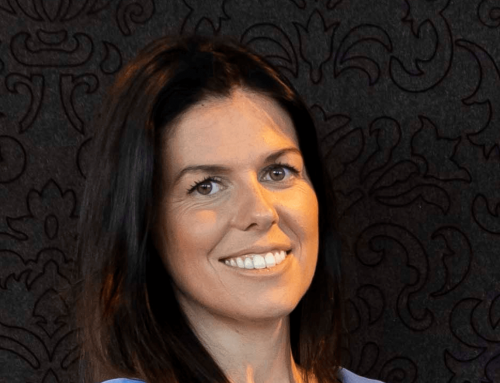
ABOUT ATRAYAH
Atrayah Janhe works remotely across the UK, Europe, and South Africa, supporting leaders in distributed and fast-moving environments. With over 20 years of international experience, including five years as Personal Assistant to Archbishop Desmond Tutu, this practice is grounded in discretion, diplomacy, and mature judgement within high-trust settings.
Born in Rhodesia, departed Zimbabwe and settled in South Africa in 1981. From Secretarial Studies to Police Woman during the Rhodesian Bush War, Atrayah became the Personal Secretary to an executive in the travel sector, thereafter relocating to South Africa.
From admin & fitness instructor to PA & Campaign Manager to a Member of Parliament during the 1989 General Elections leading up to the release of Nelson Mandela from Robben Island, she has worked as a radio presenter; facilitated corporate workshops in Emotional Intelligence; lived in the UK as a PA Carer to high profile individuals before becoming Archbishop Desmond Tutu’s Personal Assistant in January 2015.
ABOUT EXECUTIVE OFFICE INSIGHTS with DIANA BRANDL
Executive Office Insights is a podcast for executive support professionals hosted by Diana Brandl – an accomplished trainer, consultant, coach, and former C-suite senior executive assistant with nearly two decades of experience at renowned international companies, this podcast dives deep into the evolving world of executive excellence.

Diana explores the critical themes shaping the modern workplace, including leadership dynamics, digital transformation, AI, and the future of work. Featuring insightful conversations with a diverse range of German and English-speaking experts, each episode equips listeners with actionable insights and strategies to thrive in the ever-changing executive office landscape.
–––
THE LEADER ASSISTANT ACADEMY
Enroll in the on-demand, AI-powered professional development resource for Leader Assistants who want to level up. Learn more -> The Leader Assistant Academy.
THE LEADER ASSISTANT BOOK
Download the first 3 chapters of The Leader Assistant: Four Pillars of Game-Changing Assistant for FREE here or buy it on Amazon and listen to the audiobook on Audible. Also, check out the companion study guide, The Leader Assistant Workbook, to dig deeper.
JOIN THE FREE COMMUNITY
Join the Leader Assistant Global Community for bonus content, job opportunities, and to network with other assistants who are committed to becoming leaders!
THE LEADER ASSISTANT PREMIUM MEMBERSHIP
To learn more about how you can join growth-minded Leader Assistants, check out our Leader Assistant Premium Membership for ongoing training, coaching, and community.
LEADER ASSISTANT LIVE EVENTS
Check out our constantly updated schedule of events for admins and assistants at LeaderAssistantLive.com.
SUBSCRIBE
Subscribe to The Leader Assistant Podcast so you don’t miss new episodes!
You can find the show on Apple Podcasts, Spotify, Google Podcasts, Pandora, and Stitcher.
Join my email list here if you want to get an email when a new episode goes live.
LEAVE A REVIEW
If you’re enjoying the podcast, please take 2 minutes to rate and review the show on Apple Podcasts here. Each review helps me stay motivated to keep the show going!
–––
EPISODE TRANSCRIPT
Hey friends, thanks for tuning in to the Leader Assistant Podcast. I’m excited to share another spotlight episode of my friend Diana Brandl’s show, Executive Office Insights. Be sure to check out the show notes for more information about her show and today’s featured guest. But in the meantime, enjoy this conversation and keep leading well.
00:00:28
The Leader Assistant podcast exists to encourage and challenge assistants to become confident, game-changing leader assistants.
00:00:42
Take a look at the show notes for this episode at leaderassistant.com/378.
00:00:49
Hello, everybody. Guess where I am sitting at the moment. It’s beautiful Cape Town in South Africa. I’m actually in room 805 at a beautiful hotel out in Century City. And I’m not alone. Obviously, you can imagine I have a guest next to me, and I’m glad she accepted the invitation to join me in my tiny little hotel room here. I threw my husband out. He’s working downstairs and we had a great chat already and I can’t wait to introduce to you my guest here because she has a lot to tell, not only from the previous role she was in, but also what she’s doing right now. A great advocate also for the assistant profession and the VA profession. You’re going to hear more about her. And I hope I won’t make a mistake now. I have to look into my notes to pronounce a beautiful name. Welcome to the podcast, Atrayah Janhe. That is correct, yes. I’m so glad I didn’t mess it up already. Good morning and welcome to you. Glad you made it.
00:01:43
How are you today?
00:01:45
ah Diana it’s uh it’s Diane or Diana I don’t know but I should clarify that Diana uh yes it’s a I I work up with a balance to my step obviously and uh you know like when one is preparing for any type of an interview you know you prepare notes and you read through it like over and over and then you know it’s like then you get to the the interview and it’s like now what
00:02:06
So I’ve decided actually I’m going to put my notes to one side and just speak from my heart and just, you know, memory, really. So I’m delighted to be here. Thank you so very much for having invited me. Absolutely. A privilege.
00:02:21
I’ve been inspired by your story and I’ve been, you know,
00:02:26
through mutual friends and people from the industry, it’s wonderful to get to finally know you because social media offers a way of connection. But when you sit in front of someone and when you look them in the eyes and you have a chat together, that’s the moment where you connect. So there’s great opportunities out there for online networking, but the real magic happens when we sit face to face like we do now. So I’m sure that everyone was
00:02:51
Probably in parallel, starting to Google your name, because what did Diana just say? How do you pronounce that name? So maybe you need to help us a little bit.
00:03:00
Where does the name come from?
00:03:01
Okay, so my name, Atrayah, the first thing I will share is that Atrayah Jeanette, my name, the name Atrayah, A-T-R-A-Y-A-H.
00:03:11
It’s a sound tone. And it has a significant meaning. So much like indigenous tribes or indigenous people, they have ancestral names. And when you actually ask, let’s say, an African, an Uber driver, like I do all the time when I’m driving around Cape Town. I don’t own a car. I Uber everywhere.
00:03:29
I love Uber. Yeah.
00:03:30
And I always love my drivers. They’re just such personalities. And the one thing I’ll always ask them is like, what is your name? And they’ll say Raymond or Joe or, you know, like a very westernized name. I go, no, no, no. Tell me what your ancestral name is. And then they’ll name it off. And I go, oh, my goodness, how beautiful is that? Why don’t you actually introduce your name like that? And then they’ll give me all the reasons why. And I go, no, but it helps other people. Yes. develop neural networks in their brain because they’ve got to really figure out, like, how do I say that?
00:04:00
So Atreia actually originates, it’s from the Azerite tribes. The language is Anahazi, and it predates the Sumerian culture, which predates the Jesuit time, the Christ period. So it’s ancient. It’s ancient lineage.
00:04:15
The tribes themselves migrated out of Mesopotamia down into Coral, South America, and from there migrated up into Africa. And of course, there’s been disbursement as all migrations happen.
00:04:27
And here I am, I was born in Rhodesia, which people now know as Zimbabwe, like landlocked. And I often go, how did I end up there? You know, quite there, all places. So yeah, so my name, the meaning of my name is soul song. So when you say my name, it’s like singing to me on a deeply spiritual level.
00:04:46
It is. And I remember the first time I saw that name on LinkedIn, I was like, how do you pronounce it? So it’s indeed very beautiful. And you mentioned Zimbabwe already because I felt like, are you a native Cape Town lady here? I mean, you’ve been in the city for how long now?
00:05:01
Gosh, well, I’ve been in South Africa since 1981.
00:05:06
I was born in Rhodesia, and obviously we had the Rhodesian Bush War. I was a policewoman. I’d actually, my secretarial, well, the history of my secretarial start was from college. I did a secretarial diploma. That was in the 70s.
00:05:20
I did my first job out of college. I lasted one month. It was a dismal office space with very old men. And I just, I really didn’t enjoy any minutes of that time that I was there. And I was like, this is not for me. So, you know, the environment also impacts decision-making. And that was definitely a decision that I was never going to be a secretary again. Who wanted that, right? Spent my first salary, every cent, and then I signed up to join the police force. Yeah. Because I come from a military background.
00:05:47
Totally different industry.
00:05:48
Yeah, totally different industry. You know, I’d also been in the health and fitness game, you know, from the age of 16. So that’s also part of my background. But, you know, I was on duty looking after all the high-profile people, VIPs. The night the Rhodesian flag came down, Bob Marley electrocuted himself on the stage. And then the Zimbabwean flag went up. And I was like…
00:06:11
Okay, so I resigned out of the police force, and then I went into, I changed city, went to another city, and then I became the private secretary to the national sales manager of a large national travel agency. Okay. And that was really my first, let’s say, official position, doing admin secretary. In those days, you weren’t called a peer, you were a secretary. Yeah.
00:06:36
We’re talking a long time ago. Now we have over 160 titles according to the Global Skills Matrix out there. It’s incredible. It is incredible. We’re going to talk about your opinion and how the profession has changed, and I’m very excited to hear about that, going back in your early stages of being a secretary and, of course, the work you’ve been doing in the past years. So would you call South Africa home now?
00:06:58
Oh, absolutely. No doubt about it. I feel very at home here.
00:07:02
You know, from the moment that we landed, I mean, I arrived here in this country out of Rhodesia, Zimbabwe, you know, just slash that with a backslash there. And I came with a couch.
00:07:16
I think we had $500. Okay.
00:07:18
And maybe, I think, maybe a bed. I was with my fiancé. You know, we left the country. My parents followed after that. And we landed up in Johannesburg. That’s where we started out. Okay.
00:07:28
So even in Hillbrow, of all places, I mean, you mentioned Hillbrow and Joburg. Now people are like, what? It’s like a no-go zone at the moment.
00:07:39
But then, again, we are talking a while ago in the 80s. It was really okay.
00:07:45
It was an okay space to be. It was safe. It was a vibey place.
00:07:51
And that’s really how I started my life in South Africa. We had to start from absolute scratch.
00:07:59
And, you know, I literally, when I first arrived in South Africa, obviously, you know, you job hunt, and I went up to a public relations company that was in a building that on the bottom level was a health and fitness center. So I went up and I did this interview at this public relations company, but it was all females.
00:08:21
And I was like, so from all men as a secretary to all females in public relations, no, that’s not right.
00:08:29
so it’s amazing how your brain works you know it’s like holy wow I used to actually think that way but I actually was I declined the offer of the job I went downstairs walked into the gym and the owners for some reason they were drawn to me when we chatted and they said well we’re actually looking for something to run our whole administrative side and we’ll train you up to be a professional aerobics instructor well I come from a fitness background I was like oh wow what an amazing And yes, I just put my hand up. Yes, yes, yes, yes. I’m in. I’m in. I’m totally in. No hesitation. It was a good move, actually.
00:09:03
So would you say that you are a person who listens to stomach feelings rather than the head voice that is in you? Yeah.
00:09:12
I think there’s a time you have to use your head and really be very IQ based, especially on the financial side. I mean, your heart can tell you all sorts of things, but it doesn’t necessarily lead to a successful long-term outcome that’s sustainable. So I think there is merit to IQ, but most of my decisions are driven or initiated by
00:09:35
an intuition, a feel.
00:09:38
This feels right. If I feel right with this person, then I’ll have a block with another person. I like this environment. Oh, I don’t like that environment.
00:09:44
And we chatted about this earlier, of finding the right matches. If it’s professional, if it’s private, if it’s the opportunity of saying no to certain things, that it gives us a good feeling of knowing that it was meant to be a no, right? It doesn’t need to be a yes all the time.
00:10:01
So I was curious to find out, you know, what is the stronger voice in you? Is it the stomach or is it the head?
00:10:08
My husband and you just met him briefly downstairs. He’s the head and I’m more the stomach here. Oh, well, that’s a good balance. It is a good balance. That’s a great balance. That’s harmony. Sometimes he’s like, you know, listen to your head voice in that moment because the stomach might not be enough always. Exactly. Well, that’s symbiosis, right? Totally. Absolutely. Yeah. So you just mentioned that you started your career as an assistant very early in the 80s. And so what do you remember back then? We were all called secretaries. We were into admin stuff and admin coordination and organization, filing. We had tons of paper around us. Of course, all different ages back then. And don’t forget the typewriter. Yes.
00:10:50
Computers didn’t exist then, right? It was all typewriter and you had your carbon copy and you had your typics. Yes, of course.
00:10:57
How can I not mention that? And everything was faxed. There was no instant messaging. Totally. Did you learn shorthand? I learned shorthand. Yes, shorthand. Yeah, yeah.
00:11:06
I never used it, but I learned it.
00:11:08
So what were your thoughts back then in the profession? And what do you see now? How it changed over all these decades now when we are so into the future-proof world out there?
00:11:21
Well, I think, first of all, as a secretary and female, one can’t negate or disregard the societal impact or perception. Back then, you were a female, you were young, and you were a secretary. You were like a nobody in the larger scheme of things, in the larger context of a company.
00:11:42
The relationship, really, the dynamic was with the national sales manager. And he was great. I really liked him. He got on very, very well. I loved his family. They welcomed me. And a wife is very important. I think as a PA, you always have to bear in mind, if you’re working for a man, your greatest ally in that professional relationship is the partner to the boss that you report to and support. I can’t emphasize that enough. The relationship…
00:12:09
to be developed with the partner is a crucial, for me, a crucial step in having success in the world that you are in.
00:12:18
But going back to my role, I loved it. I really did. I left the police force.
00:12:24
It was a completely different experience I had a beautiful view onto a park, and I’m all about open spaces. So it just bred to my – or spoke to me on a different level that wasn’t, you know, like just business. So I love going to work in the mornings, and it was like, you know, bye, and we’d had a great day. And it was. It was diary management. We didn’t call it that at the time. It was making phone calls. It was speaking to customers and taking shorthand. Yeah. And doing reports and, yes. But, you know, there was no, like, you know, editing and things. You didn’t have a machine to kind of do all that, which you do today. So, you know, in many ways, I think that there’s, you know, again, it’s kind of like evolution, isn’t it? You can’t look back to that and say, if only we still had that, or back then to look to the future going, I wish I had that. It was what it was, and it is what it is.
00:13:15
However, I would say that in the workplace environment, there was more for human connection.
00:13:25
It was more about collaboration, clear lines, transparency, and heart. I find that a lot of those aspects are missed today because we’re so reliant
00:13:38
on instant messaging, which creates just all that by itself. You are in constant demand. You’re expected to answer within seconds. It’s like stopping at a robot these days and the robot has just gone green and people are hooting around. Same thing. We’ve become so, everything must happen like now. So patience has gone.
00:13:58
Listening skills barely exist, and where they do, that’s magic.
00:14:03
That’s really a magical quality to have, an arch. We’ll speak about his grace in a little while, but that was my learning from him, is the talent or the skill to listen. And observe. And observe, yes, of course. Well, listening allows you to observe, right? Because you’ve paused. It’s so true. Yeah, yeah. So that’s an inherent factor to that. Mm-hmm. But in terms of from then to now, I think that the human connection has been so diminished. We’ve literally lost part of ourselves because we’ve become so reliant on machinery, AI.
00:14:40
You do a document and you do a control A if you’re on a Mac like I am. It highlights the whole thing and you go justify and the whole thing gets justified. It’s not like you’re a typewriter and having to like, how do I get that to end there? So I think that The excitement is gone. It’s all very driven by IQ, instant responses, must be this, must be perfect. It’s like everybody’s trying to take a breath.
00:15:04
And we have tons of windows open in our computer, and there’s one messenger, and there’s one email coming in, there’s a phone call coming in. And now, of course, the remote work. So we deal with people through a webcam. And so what do you think, how can heart respond?
00:15:21
happen this way I mean how do we stay closely connected and how do we deal with conflicts when we look at someone in the webcam and we don’t get to see these people for a couple of weeks but we’ll we have a conflict to solve any advice from you how would you see the situation as an assistant specifically
00:15:40
Well, I think that really comes down to the element of emotional intelligence, right? You know, self-awareness. You know how you feel on a bad day. You know how you feel from a lack of sleep. You know what you feel like when you’ve had an instant message which gives you really bad news. And the reactive process. Do you have fight, flight, or do you freeze? So if it applies to you, with EQ, you can identify or at least intuit. I suppose that’s obviously individually whether a person has intuition or not. But I think we can all see or we sense something. We might not name it, but we do know.
00:16:17
So when you know that about yourself and you see that in another person and you know where they’re at, there’s such an opportunity there. To connect with that person. I mean, to really stop and say, how are you? And to then shut up, like zip the lips, pause, stop walking, and actually listen to what they tell you back. Because we are on such a rote. Have you ever watched people, even I do it often, you’re walking down the street and you see somebody and you go, hey, how are you? And they’re actually carrying on walking. You’re carrying on walking and you’re going, oh, I’m fine. Meanwhile, they’ve actually moved on. And you’re going, wow, that was like no connection there, right?
00:16:54
It’s true.
00:16:54
Yeah. So I think that the ability to read where people are at happens because you know how to read yourself. And I think if you don’t even know yourself, how can you possibly know where other people are at?
00:17:09
And you know what makes me so sad is when I work with assistants in my coaching sessions and they keep telling me that their executive has no time to sit down with them, to go through the agenda, to go through the schedule, to make the travel planning.
00:17:21
And it makes me so sad because both parties should be aware that this is crucial time. And there should be, every day when it’s possible, a little check-in in the morning to really harmonize on the goals and to really… I have an understanding that’s what I try to get my executives into when I propose that I would love to have a check-in in the morning and a check-out in the evening just in order to find out did their priorities shift. And I need to be aware. I need to be the first person who needs to be aware because I manage the agenda. I manage the emails. I have the overview of everything.
00:18:02
So have you ever encountered these issues in your career that there was lacking of attention from your executives, not having the right moment of time for you to give all the information to you? Because now in the future of work, we get information through WhatsApp. We get information through a messenger because the executives don’t have the time to sit down with their assistants. Would you say it was much better back then?
00:18:29
That’s a good question. Can I pause that? I just want to step back. You asked me about what do you do when you’re on remote and there’s a conflict and how do you handle that? I think it really, with self-awareness, you have social awareness, is to actually ask the appropriate questions, to do a discovery without… that person’s feeling threatened or they’re being accused of something. I think that way you build back rapport and then you can, through open-ended questions, you can discover where they’re at and ask if there’s anything you can help them with. See what comes from that. That breaks down the barrier. I have found that myself. So I just wanted to address that and finish that point. Okay, so I’m so sorry, I’m going to have to ask you, just repeat the question.
00:19:11
So lack of time that the executives also, because they are also pressured with the new ways of working, they also have to manage their tools. And sometimes when they go back to their assistants and they say, well, I need to run to the next meeting, I don’t have time. So I always challenge my coaching clients to tell with a strong voice and let their executives know, yes, but I’m here responsible for your time. I’m your efficiency manager. I’m your productivity manager. If you don’t sit with me, we cannot work on it.
00:19:42
would you say it was easier back then without technology oh yes yeah it was much easier because the first thing you did is you took your boss a coffee or tea right with your pad and your pencil to do shorthand to take notes so I mean right there I mean to start the day you that’s the first thing that you did whether it was newspapers so like with the arch I would it would be like he’d arrive and we’d bring him a hot chocolate and all his newspapers would have been laid out and Then we would all, like, it was so cute. He would come in and the whole staff would literally line up and come up and give him a hug. Good morning. How beautiful. And then we’d make our way to his office. And it would be at that moment that I would say, is there anything that’s a priority? And he would say, not right now, dearie. Thank you. So it was all, and if he did, then he would just, you know, sort of give me a little bullet point, bullet list. Right. So I think that it depends.
00:20:30
I think it very much depends on the relationship.
00:20:34
I think if you, again, I’m going to say it again. If it’s all IQ, it’s all skills-based, it’s all task-driven, and there is no heart connection, there’s no relationship, there’s no communication, like just relaxed communication,
00:20:50
then I think right there is the biggest stumbling block that exists because you’re just like an AI Alexa. Exactly. You’re just in a human body. So, you know, it’s all by rote. It’s just a disconnect. And I feel that that is very much predominant in the industry today, whether that’s virtual or traditional. Right.
00:21:12
So I think the basis of… PA executive PA or virtual assistant or whatever other you know title that one carries at the end of the day you’re still a secretary bottom line is we’re all just full secretaries but you know a vaster skill set more technology to assist us in our proficiency and professionalism but
00:21:36
I think it’s about building the relationship with the person. So even if it’s IQ, even if it’s task driven, if you as the individual, sorry, I tend to draw.
00:21:44
No, I love what you say. Keep going.
00:21:47
So I think you, the individual with the title you hold, the bottom line is you have a relationship with that executive. Mm-hmm. That’s your primary interface point. So ask questions.
00:22:01
You make the pause point. You create the pause point.
00:22:05
You just bring him a cup of coffee or her a cup of coffee. I’m talking, obviously, this is a traditional role now because virtual, that wouldn’t work. But you can still send them a digital coffee image or whatever just to make that link. Because that’s the connection at the heart level, right? And ask the question. Don’t give that person a moment in time to ponder and make you feel like you’re wasting their time. It’s like, hi, Dennis. Okay, here’s your tea. I’ve just thought you might like this because you seem rushed today.
00:22:33
What’s a priority right now in this moment that I can take away and off your plate? Very good. But if we’re just so intimidated at the idea that, oh, he doesn’t want to talk to me, she doesn’t have time for me, well, that’s a story in your own head. So there’s a saying, when I used to teach or lecture in the EQ for leadership in corporates, one of the processes that we ran and through that was, if you have a challenge, if you have a problem,
00:22:58
And you are wanting to make that change. Because as long as you wait for somebody else to make the change, you could wait a very long time and then it never happens. You want change. The only person who can actually do that is, I hate to tell you this, you. You are the one to initiate. You are the one to motivate. You are the one to think outside the box.
00:23:18
So how do you create an awareness in another person that’s completely blind to the need for change? Well, you have to build the bridge. It’s about communication.
00:23:28
And one of the things in the leadership program was you’ve got to try 33 different approaches. What does Einstein say? What’s one of his famous sayings? You do the same thing the same way over and over and over again and expect a different result. Well, that’s some sort of insanity. I mean, I’m not sure I got the quote right, but the essence is there. So yeah, so if you’re trying to approach your boss the same way and saying, first of all, your body language is one of frustration, then your tone of voice is completely negative, then you’re short, you don’t use the right terminology, no, that’s not going to work, right? It just isn’t going to work. Absolutely. 33 different ways. I guarantee you by the time you’ve tried the fourth, fifth, sixth time, a different way, a different approach, it’s either going to work or you’ve got to realize that, do I want to stay in this job or do I want to find something else? Because it’s never going to change. That person doesn’t have that capacity. So it’s still a choice.
00:24:22
You’re not a victim. No one is ever a victim. There’s always a choice. And the choice is to make the choice to leave. The choice is to actually say something. The choice is to be silent in the moment and to listen. It’s still a choice. Nobody can tell me no one has a choice. Everyone has choice.
00:24:37
But we are sometimes so afraid to take a decision, right?
00:24:42
And I’ve seen assistants, not only assistants, people also in my closer community of friends, they stay in these toxic environments in their companies and they keep on telling me all these negative stories. And I always say to them, jump, you know, jump, even if you don’t have a solution yet.
00:25:00
You know, the moment you close the door, another one will open and you are not even aware of it now, which direction it may bring you.
00:25:07
So would you say that you are a person who loves to jump?
00:25:10
Oh, I love to jump. I’ve had to jump so many times, redefine myself. You know, I’ve had no consistency in traditional roles. I’ve been an entrepreneur. I’ve been a personal trainer, a fitness instructor. You know, I’ve run commercial and corporate facility gyms. I’ve appeared high net with people. I’ve worked for government in terms of the MP, the Minister of Parliament in 1989.
00:25:38
So I’ve been in corporate mining. It’s so diverse, but underpinning every single transition is the need for administration.
00:25:47
Whether in an entrepreneurial role, it’s a bit more expanded because you’re running now your own books, your finance, your marketing, your sales, because you’ve got to drive your own business. You all know this, Diana. Of course. You have your own business. Of course. Whereas in a job, and I think that’s the distinction. Yeah.
00:26:02
I mean, look, I still experience moments of fear. You know, it’s like I wouldn’t be a human being if I didn’t have moments of fear or like, oh, wow, is this the right decision?
00:26:13
But, you know, a decision is better than no decision. To sit in a static flight pattern, you know, it’s eventually that if you’re an airplane going around and around, you’re eventually going to run out of fuel and crash. Same thing if you’re rotating around and around and the job that you’ve ready to get up in the morning for that is like stressful.
00:26:33
You need to jump or you’ve got to do what I said just now and do 33 different approaches to try and make that connection and resolve the issue, resolve the situation so it’s better for you.
00:26:44
But I will say most people that are stuck in those patterns, it’s money, it’s finance. It’ll come down to either they’re single parents if we’re talking about ladies or They’re going through a divorce. They might be in a marriage and it’s not stable.
00:26:59
There might be just this free enterprising into virtual. And money, I think, drives the fear level or judgment from friends because you’re now working for this person in this corporation and it’s giving you some kind of status to let go of that. Well, then who am I now? Mm-hmm.
00:27:19
So fear is the thing that will keep you keeping people.
00:27:22
Absolutely, it’s blocking people. Yeah. I agree.
00:27:24
And it’s being able to identify, well, what is holding me here? And if you can’t list that out, then unfortunately you sleepwalking in your job. It really is just by right. Mm-hmm.
00:27:36
I’m very disconnected. I’m glad you’re a jumper as well. I love to jump as well. Yes. Oh, yeah. You know, when I was in the UK in 2020 after the Arvidsch, I ended my role with him in January in 2020. Went to the UK because I could see the pandemic coming in. I mean, you just have to look at news cycles and you can see what’s happening. I was like, oh my gosh. Okay. So, you know, my age wasn’t really in my favor. I am in South Africa. B-E-E-B-B-E-E. How many B’s and E’s? It’s just like, no, this wasn’t any longer a viable environment for me. Um,
00:28:11
And so I decided to go back to the UK, right at the height of the pandemic. I arrived, within five days I had COVID.
00:28:19
It was so bad that actually paramedics came in in the hazmat suits because we weren’t sure if I’d have to go in an ambulance. Fortunately, my O2, my oxygen levels were right on the line. So that was great. And I recovered in 10 days. Then I went into training, into the care industry. And it was such a good move. It was strategic, right? It was like, okay, I need to earn a salary. And I need to go somewhere where it’s going to be necessary for me to work. It’s not a luxury job. It’s not something that somebody can just go, sorry for you. My business is closing down. You no longer have relevance. I had to be relevant. And so that was the care industry.
00:28:54
Interesting.
00:28:55
So I did that for the year. And everywhere you had to have paperwork and you’re an essential worker. So you were classified as an essential worker. So it didn’t matter where I was going. I was always allowed to pass through.
00:29:06
county lines, et cetera, and go from one part of the country to another to look after these amazing people. I’ve always loved that role as a carer. I think it teaches you tremendous humility and servant leadership. That was one of the things of the archbishop, you know, servant leadership. It’s like you’re not just you. You’re you contributing to others and uplifting them and empowering them. So that was really why I also went back into caring was because of the influence of the arch.
00:29:37
So anyway, and then towards the end of that role, it was very interesting. They were introducing, this could be a bit controversial. I don’t mean to push anybody’s buttons, but they were introducing the vaccine and I was never going to have that vaccination. Experimental? Hell no.
00:29:51
No way. It wasn’t going to happen.
00:29:53
And I decided to come back to South Africa. I had no idea. I had no job.
00:29:57
I had no home.
00:29:58
I had no clue how to earn, how was I going to earn an income? But you know what? My freedom of choice,
00:30:05
meant more to me than being forced into a situation that I was not going to comply with. And so I wanted to respect the elderly. I wasn’t going to vaccinate. And so therefore, in that sort of age group, that’s very much what they were going to require. And I wanted to step away with grace. So I made the decision to come home. And I remember my daughter at the time going, you know, mom, you’re going to give up your UK pound, your sterling. I mean, good Lord, look at the currency exchange. I’m like, sweetheart, there is nothing more important than one’s own health. And I’m not going to risk that for the sake of a salary. So yeah, I resigned my role and I came back to South Africa. I moved in with my son who lives in our family home and he had to retire.
00:30:44
He had to adapt to his mom, you know, living in the house again. That was fun.
00:30:49
It was the other way around.
00:30:50
It was the other way around. He used to like kind of freak out and go, mom, mom, I still live with my mom. I’m like, no, sweetheart, you’ve got that wrong. It’s like, I am hosting my mother. It sounds far better. I’m sure you prefer that, right? And he was like, oh yeah, that’s a great way to say it. Okay, cool. So yeah, so just talking about like how do you leap? How do you jump? It’s like sometimes it’s just, it’s really about your own integrity, right? And your own truth. And you’ve got to live that. And you’re 100% right. Every time that I’ve made that jump, whether I’ve had a job to come back to, a salary that I would be earning, I’ve made the jump with no knowledge of what would come next. And you know what? Miraculously, that door opens. See, here we go. And the Archbishop is another door that miraculously opened for me. Being on your podcast is a miraculous opening of a door. Mm-hmm.
00:31:36
And I can’t wait, of course, to talk about more of His Grace, because you’ve been mentioning His name quite a few times, and it was for sure a very important stage in your career, serving for Him five years. Archbishop Desmond Tutu, of course, we’re talking about. A huge…
00:31:54
name for all of our listeners. And it’s incredible from the outside to watch the person. And you got closer to him. So you’ve been mentioning, you came in in the morning, looking at these papers, having a hot chocolate. Did he have these kind of routines every single day?
00:32:13
Was he sticking to routines?
00:32:15
Was he a big fan of routines? Yes. He’d come into the office three times a week, so I was working for him three days a week. I started as a half-day job and quickly evolved into a full-time job. And then even the other two days, I was working full-time because of the fact that I was out of an office. So my job really became 24-7. I’m sure people can appreciate how that can happen.
00:32:38
The foundation itself, I think they really wanted him to be only half a day.
00:32:45
So, you know, he would leave like by three o’clock in the afternoon. And his son-in-law, Tunzi, probably one of the nicest, kindest people I’ve ever known. He truly was absolutely fabulous and so good to his grace.
00:32:59
Obviously, he’s the son-in-law as well. So he played a very, very prominent role in the archer’s entire career right up to when he passed away. So Tunzi and I used to have to work closely together and travel together on different occasions. And, of course, Mama Lea, Mrs. Tutu, she was a large component of the archer’s constellation of people.
00:33:23
And then, of course, he has that expanded family. So that’s one side of the archer. On the other, in terms of coming into the office, having a routine, even out of an office, he still carried that routine at home. Oh, lovely. So his mornings was all about hot chocolate. That was his favorite drink. Also loved rum and raisin ice cream. Oh, sounds good.
00:33:42
Yeah.
00:33:42
So like special events, occasions, if he was being honored or he was doing a speech and a dinner was afterwards. Yeah. It was always a rum and raisin ice cream as an option, just for Arch, and hot chocolate. Always hot chocolate had to be available for him.
00:33:56
So, and obviously newspapers were important. I would put in from the day before or early in the morning, because he’d come in after me, prepare documents, like things that he needed to. So we used to have the plastic folders, and each one had a title, like correspondence, important, media requests.
00:34:14
So those would all be in his entry. So once I’d gone in, I would follow him after we’d all hugged him hello, of course, follow him to his office.
00:34:23
And then he would, you know, his papers would be there, his hot chocolate would be there. And I would just quickly show him what folders and could he take time. And then I’d close the door. And then 10 o’clock would be tea time where the whole staff would come together. We had this huge table. We were at the V&A.
00:34:37
That’s a nice routine.
00:34:38
So there was this, twice a day, he insisted that everybody would come to the table no matter what they were doing. It was a time for the human connection. Yes. Story sharing. No cell phones. No cell phones, no nothing. And there were biscuits and tea. And our tea lady was wonderful as well. And the staff were great and worked with amazing people. I will tell you that. And the first few years, his daughter, she was the managing director. And of course, she played a significant role. um and she was wonderful a great character and i remember her often sitting at the table with her knitting needles knitting away and the arch um he at that point the folders would come back to me and then he’d go back to his office as part of his routine i would then go through the the paperwork and then i would liaise between business manager and the managing director on like you know things that were
00:35:27
about to be actioned. And then we would go back in, bring him his lunch, and then he would go into prayer. And that was a standard practice for him every day that he was at the office.
00:35:38
And the same thing when he was home out of the office, even when he moved to Hermanus, that was still part of his routine. Beautiful area, by the way. Yes, yeah. The whales. Yeah, the whales. So yeah. So the arch loved, you know, he worked on his routine and his contemplation and prayer were really very important to him. And I think,
00:35:58
There were a couple, I mean, a couple, one thing, how silly of me, multiple, innumerable learnings.
00:36:06
I was going to ask you, what are the core learnings you took away from it?
00:36:09
I can name a few core, but I think one of the things I really recognize, we spoke about authenticity when we chatted before we started the podcast.
00:36:20
And the Arch for me, the Arch is Archbishop Desmond Tutu, His Grace. So he loved everybody to call him Arch. So Arch was one of, he was the most authentic person I think I’ve ever had the privilege to meet. If he wanted to be quiet, he would let you know. Dearie, I just want to be quiet now. If he was active, then he was active. If he was in a great mood, everybody was in a great mood. Because when he laughs, no matter where you are, if you can hear him laughing, everyone would join in that laughter. Because he was such a joy-filled person. He was incredibly generous. And I mean, I used to escort him down to…
00:37:00
you know a luncheon for example that was in the diary yeah and your people would would just flock they would flock with their mobile phones to ask him for photographs of course you know i’m acting as like security and you know protection and i’d say please can you give him the space and then one day we were going down the stairs and a lady came up to him and i put my hand was it because you he’s on his way to an appointment and he took my hand he said dear you know
00:37:23
I think on this one occasion, let’s allow the photographs, okay?
00:37:27
Generosity. Yeah.
00:37:29
And his whole thing was about if I can touch somebody’s life in a positive way, if by speaking with me, having a photograph with me, interfacing with me, even for a moment, if that can give joy to somebody and meaning to somebody, then that’s what I want to do. That’s why I’m here.
00:37:46
And again, it comes all back together.
00:37:49
He showed his heart. He showed his heart, yeah. Art was all about heart. I will say on the other side of that, when he needed to manage, he definitely knew how to do that. If he needed to put boundaries in place, if he knew when to say no, he really was…
00:38:05
He was an incredible person. Touched my life. He was the consummate gentleman.
00:38:12
He would never walk through a door in front of me. He would always open my car door. I watched him with Mrs. Tutu. It was a love story that you read about in novels. It’s spoiled me in many ways.
00:38:27
I’d love to experience that with a partner. That would be so cool. I’m single, so I haven’t been in a relationship for a long, long, long time. Because I just don’t find that exists anymore. It’s just like an obsolete idea. So in terms of being his PA,
00:38:44
It was a privilege. You know, I had to go through four levels of interviews before ultimately I sat with him.
00:38:53
And, you know, Arch used to speak about the Rainbow Nation and that all religions and faiths were completely one. You know, they were all welcomed and respected. Yes. And I remember him asking me like in the interview, of course, I was so nervous. Yeah. And the one thing that struck me is that he had a lazy boy in his office. He said, do you mind if I kick back, you know, and just sit in my chair?
00:39:16
Your recliner.
00:39:17
Yes, my recliner. And I was like, yes, of course. That’s a comfortable interview.
00:39:21
So, you know, he kind of sat back and then he put his hands together, you know, how we would do that, and he closed his eyes and he said, I am going to ask questions and I’m going to listen to your responses. Is that okay? And I said, yes, of course.
00:39:37
And one of the questions he ultimately asked me is like, do you believe in God? And I said to him, well, you know, one looks at creation. How can one not believe in the presence or the creation of God, so to speak? And I said to him, however, I don’t follow dogmatic religion. I don’t, I’m not in a formal religion. I would say I’m more, I tiptoe in and out across all religions because they all have interface points. And that’s more where my faith resides. And he said, that’s very beautiful. He said, that falls right into my philosophy of all faiths, all religions. So that’s wonderful.
00:40:14
Beautiful. And I just remember that being so, well, you know. What were your thoughts when you went out of this interview? Did you have confidence in yourself that you’re going to land a job?
00:40:26
Yes. I had confidence, but I think it doesn’t matter how confident you are. There’s always that tiny percentage of, well, you know, maybe you didn’t quite work it. as confident as you might feel. But I got a call within a couple of hours to say, yeah, it was a match. You’ve got the job. Thank you so much. Please, when can you start? And then it was just a process of doing handover and moving into that role.
00:40:49
But it was a lot. And the VA before me, Vivian Ford,
00:40:53
She was incredible. She was with him for seven years. And she was with him during, you know, real peak time where he was a real public figure, a global figure. So again, Tuan Tzu fits into that. And then before Vivian, there were a host of other VAPAs. And they’ve all been at pivotal points in Archer’s career. You know, every one of them. at a different junction. And like you, you were part of the transition, right? So, yeah. So my junction came and I think one of the main reasons I got that role that appealed to his daughter because she herself and the managing, the managing, what do you call them? Business manager.
00:41:29
Yeah.
00:41:30
Carol Allendale. They were the two that interviewed me just before the arch. And there was another lady. So there were two. So we’d been shortlisted down to two ladies. So there’s myself, which is a very diverse background and a caring background, right? And then there was a lady who was very corporate. She came from a complete exclusive corporate environment. So she had every skill set you would need. Now, if it had been the peak of his career, that was a fit. But
00:41:55
It was important for the foundation, for his family, that the arch moved because of his age and his health from full-time into part-time and then to transition to being retired. Now, my role as a carer working with high-profile individuals, every one of them hugely successful.
00:42:15
And for them to move from active life into…
00:42:21
And having a doctor say, well, you know, you’ve been in hospital, you broke your hip, you have to have a carer. It’s a real challenge for people. It really, really is. I can’t emphasize that enough. You know, you’ve been autonomous, independent, you’ve made your own decisions. Now you’ve got this person living in your home. Like, what?
00:42:36
Exactly. Who are you? So, you know, you have to move through those barriers of resistance. And again, so like a boss, 33 different ways, right? So a carer with a client, 33 different ways. How do you connect so you can build that rapport and that trust? So I think that really what appealed to the third interview was the fact that I had a caring background because they felt that it would be more –
00:43:00
of the Arch to make that transition. And it really was very appropriate because, you know, for the Arch, it was like, it was a big transition for him. He was a global figure. He was a public face, but voice. I will share that at the end, in the two years that he was in Hermanus, so I ran his office completely autonomously. It was amazing. He had such trust in me, you know, with the foundation. And, you know, there were great stuff that I’d have to interface with there as well.
00:43:27
So we were a good team. And then I’d go through on a Thursday, and he would do his Eucharist. So I would pick him up, I’d drive him to church, and then I would have set up coffees for people to meet with him and do their little sessions with him. Then I would drive him back, and then we would have our big Advent. So I used to have all these folders all over his floor and his study and open each one up and he’d go, wow, dearie, we’re busy today and, you know, whatever. And, you know, ambassadors, we would organize for them to go. Hermanus, the president of South Africa, saw him at Posa. He came for tea with the arch at his home in Hermanus. That was quite the thing with all the vehicles and the police and the army. That was really quite something.
00:44:06
But really, at the end of the day, his whole stance in his last period of time as a public figure was, it’s time for new faces to be seen. It’s time for new voices to to be heard, for new leadership to come up, for new human rights activists to have a say. And he said, you know, it’s impossible to fix the problems of the world as one person.
00:44:36
And he would get requests from all across the globe on a multitude of levels, you know, for all sorts of things. Of course. He’s just one person. Now, I used to have to say, you know, you will know this, Diana, as a gatekeeper, when you’re gatekeeping for somebody,
00:44:53
It’s hard to say no sometimes. But people who had had access to him for so long, he would just say yes, yes, yes. And then he eventually had to start saying no. There was a lot of resistance to that. So a lot of people would say behind my back or to other people, who’s this Atrayah saying no? Who’s the tough one here? What’s going on here? We used to have all this access to the arch.
00:45:17
And it was really a case of me having to say, do you have a grandparent? How old is your grandparent? Would you expect your grandparent to have to appear at 8 o’clock at night at an event that you’re throwing because somebody wants your grandparent? And they go, well, actually, no. And I say, well, maybe if you frame the arch in that same category, 8 o’clock at night for him is not a time of the evening that he really wants to be…
00:45:40
out and about you know so that and again that goes to how do i how can i connect with this person to gain the understanding and then eventually there we go okay fine i see that point of view absolutely so i’m very interested to know if you um had a chance to say goodbye to him before he left this world uh no i i didn’t i we used to sms if you’re saying personally no but uh by sms yes we used to stay in contact uh via that that mode that mean and also an email
00:46:11
And we’d often exchange very short because he wasn’t writing in-depth email. But he always used to call me dearie. I mean, he did that to a lot of people. But it was a real endearment. It’s so hard to encapsulate my relationship with the Arch because it was so deeply personal. And it was also so…
00:46:36
it needed to also be and remain very professional. So it was like an interface, you know, there was like this interface between professional and personal.
00:46:48
But trust was there, respect was there,
00:46:52
Communication was very clear. And in his last period of time, he was with family. It was really his family who surrounded him. The board of directors of the foundation, obviously they played a key role. The trustees, the Desmond Tutu Trust, they were present towards the end of his time.
00:47:13
But no, my time with him had ended and I didn’t feel it was right for me to request a time to spend with him. I really didn’t. But I will say when I came back from caring in 2020, I did have tea with both him and my mother-in-law. Yes, I went to their home in Mullerton because they’d moved back from Hermanus by that time.
00:47:34
And yes, I went and had a big catch-up with them. And of course, it was hot chocolate.
00:47:38
And hot chocolate, I was going to say that.
00:47:39
It was just tea too, yeah.
00:47:41
So that was the last time that I spent with both of them. And then I think it was like one or two email exchanges after that with him personally. So no, I just felt it would lack integrity for me to try and get to him towards the end. So I wanted just to respect that boundary. Yeah.
00:47:59
I think I would have done the same, absolutely.
00:48:03
So fast forward, Ms. VA, you are the founder of Ms. VA 2020.
00:48:10
So how does it feel now working as a virtual assistant, being surrounded by the foundation and all the other steps in your career earlier where there was always a team involved and now you’re on your own. Was it hard to have that shift or was it a meaningful decision for you?
00:48:29
Well, I’d have to backtrack to 2013. I’d been a carer then as well in that period of time, 2011 to 2013.
00:48:40
And then I went back in 2020. And then before that, 2008.
00:48:44
But that period in 2013, I worked for a family who had relocated from France to London, or to Brighton to be precise. And that was really the birthing of Miss VA.
00:48:56
Right then and there. So I took care of everything. I lived with the family in their home. And so I just ran calendars for her as well as the children and just the PA role. But it was more a formalized approach. It was just such an incredible experience. And there was also a lot of concierge because I used to go to country homes and prep like put flowers and make sure the linen was there and the pantries were full. So that’s more on the concierge side. You could say it’s PA, but you could also liken it. It’s kind of like a cross-purpose, like a hybridization of the two career paths that you could take. So Miss VA really came from that. It was an idea at the time. It’s like, well, I really love this. I love this role. And so when I came back to South Africa then, I started my own agency, Organize Me Please. But you can have a great idea, and you can have great skills, and you can have great personality.
00:49:51
But you know what? Without the financial plan and a proper business plan, that’s very sound.
00:49:55
It’s all going to flop like a bad souffle. So unfortunately, that kind of got brushed off to one side. But it never left me. So Miss VA 2020 really is a continuation of that.
00:50:09
I really love that. And my role with the arch was finished. What do I do now? My daughter was like, Mom.
00:50:14
you really should consider being like a virtual assistant. You can work anywhere in the world from a laptop. And I was like, oh, I don’t know. It’s like, you know, all this hesitation. And we speak about like how people can go round and round in a circle, right? So I was doing that and I was like, heck no. I’m very good at what I do. I love what I do. I have a passion for the industry, for the people in it, and for the profession as a whole. And incredible people that are in these jobs, right? Men and women. Absolutely.
00:50:42
And so Miss VA came about because I really wanted to offer a service to entrepreneurs, to high net worth individuals, to people, families. And I find in the world today, because we’re so busy, busy, busy, always on the go, so much gets lost through the cracks. People forget things. People lose sight of stuff. And really, my role is to take on that nitty-gritty administration, which I’m sure you can relate to.
00:51:13
Oh, yes. We are here to make lives easier.
00:51:15
Easier, yeah.
00:51:18
And so that’s really where that came from. And I love it. I really do. It’s like calendar management, email management, dealing with difficult customers, customer service. I learned how to do invoicing, which actually I found I really enjoy. Okay.
00:51:32
Not accounting. I was going to say, are you into bookkeeping already? Bookkeeping? No, no, no. But invoicing, yes. Right now, I have five very distinct clients, and they are so diverse. One’s in IT. Another’s in the medical side of things, mental health. Another is a CEO of a large coaching company that has offices in Dubai.
00:51:56
Helsinki, London, right? So I’m dealing with that. So when you’re working with a CEO, again, there’s a constellation of their executives. So you might work for this one individual, however, you’re then actually working for many, many other people, or you’re assisting other people that are wanting to interface with her. So that makes it dynamic and exciting. That’s lovely to hear all those different customers.
00:52:21
Yeah, yeah. And obviously there’s a focus always on that different customer, right? Exactly.
00:52:25
I’ve even worked with farmers. You know, I’ve had one of my clients, two of my clients have been farmers. And I mean, yeah, in South Africa, I might tell you. All my other clients are international farmers. So Miss VA, really, my focus is really on the international client, Europe, London.
00:52:43
And right now, I’m wanting to grow. I’ve got the capacity to grow. I’m wanting to take on my own personal clients and expand. And through that expansion process, it may be that I have this particular or a particular skill set. But if a client actually is looking for something that I don’t have, What an incredible opportunity in South Africa with the huge unemployment levels to actually offer that opening to somebody with that skill set and align those two people together. Right? I know. So it’s not just about me. For me, Miss VA is also about offering opportunity. And then also you and I were talking earlier, and I just wanted to say to your audience that Diana is like an amazing person. She’s amazing. If you’ve never actually seen Diana, she has this incredible light and she’s very generous and just the most beautiful spirit. She’s incredible.
00:53:38
I think you’re incredible, Diana. Thank you so much. So you had said to me earlier, like, because we were speaking about my public speaking. Exactly.
00:53:46
I was going to say it again. I mean, how did you pass on your knowledge from this amazing career? Because there are for sure right now listeners who keep wondering, how can we boogie? you how do i find you don’t worry people we’re going to put everything in the show notes and make sure you check them out connect with her on linkedin but is there any specific message you want to share with us yeah um you know public speaking i mean you know i’ve had that in my background uh do i do it now specifically as a profession no am i available to to evolve into that yes um
00:54:18
So my subject matter on the public stage has been theoretical cosmology. And the coaching side has been emotional intelligence, social intelligence, spiritual intelligence into leadership. Because EQ is the primary. And I think social and spiritual underpin the emotional intelligence. So those three form the trinity for me in my book. I’m talking entirely from my personal perspective.
00:54:44
Absolutely.
00:54:45
IQ is a given. We all have a brain. We all have to use intelligence. So that is a given thing that you have. You either learn a skill, you learn, develop, that’s IQ. So that’s just a default. That’s there. But emotional intelligence is a specific skill set.
00:55:02
Social intelligence, spiritual intelligence, and spiritual is not religion. Spiritual is like, did you notice the sunset this morning? Do you hear the birds when they are chirping in your garden and stop to listen? Do you actually connect with a pet? Like, really take that time. Do you really connect with your family and put away cell phones? That’s spiritual intelligence. That’s really connecting with somebody, the connection. And that even means your boss.
00:55:33
You sparked an idea for me which I hadn’t considered before.
00:55:38
You know, when I talk to people, let’s say somebody will phone me to come into Cape Town, they’ll ask me, please, can we have lunch or coffee? I really have an issue that I’m dealing with. I’d really love your input. And, you know, we’ll be chatting away and it’ll always go back to open questions and EQ and just asking the right questions that they are able to come to their own conclusion. Because you always want somebody to find their own answer. Yes, absolutely. You never want to tell somebody something. That’s coaching. Right? That’s coaching. And they always say to me like, oh, do you have a blog or do you do, what do you do? I mean, you have to get your, you know, you have to speak to people. And I was like. That’s what I keep saying. So I loved your idea of like taking the atmosphere and perhaps evolving that to the public stage.
00:56:20
But also not just that, but you have like online small events.
00:56:25
workshops about EQ. How does a VA or EA learn this as a skill set? Because it doesn’t matter how many rote skills you have. Anybody can learn a skill if they put their mind to that. That’s just a skill. It’s technical. Right.
00:56:40
But the heart, the connection, the collaboration, the community you develop within an organization that you sit in, being transparent and authentic, that has to come from within you.
00:56:54
How do you tap into that?
00:56:55
The inner you. Yeah.
00:56:57
I would love to, to see that workshop coming into live. And I’m happy to support whenever you need my help, of course. And maybe we get feedback from the listeners if you’re interested that we run such a workshop. Anything with you, Diana, would be a great idea. And introduce it to our European community. And I think because a lot of VAs are listening to this podcast as well. We have a lot of communities out there. And I always keep recommending VAs to many of my clients. So, yeah. Why not bring this to life?
00:57:27
Well, look at that, the birth of something new. I just want to quickly add to that that, you know, part of that process or part of any relationship is how are you authentic? I mean, do you really know somebody? Do you even really know your partner?
00:57:41
Mm-hmm.
00:57:42
I don’t think people do. I mean, you might want to go on a trip to India this year, but your partner, they don’t even have a clue that that’s what you want to do. And yet you’re upset when they go, no, I don’t want to go to India. But you never ever ask the question. So if you haven’t explored that or had the discovery session or even on the same page with your partner,
00:58:01
Combined values. You can have your own sets of values. But where’s your interface values? Where do they exist? So mission statements. I see that in corporations. Boy, it’s so rare to find a corporation or a company, even an individual, that even adheres, even remotely. And the purpose behind it, right? Like, why are you in this organization? The why. Yes. Where is the why?
00:58:22
I remember I had also a wonderful connection with a former assistant to Simon Sinek, the Y guy. Yeah, yeah. The Y guy, you know, who invented the Y. And it was so interesting to meet her as well, to find out how it was to work with a Y guy. Right. And what her Y was, by the way. So I have my Y, and I always share this with my audiences, what my Y is. Yeah.
00:58:49
But yeah, I would love to talk more about the plant we just made.
00:58:54
Now it’s official. We have it on tape here.
00:58:57
But, you know, I could have talked with you for hours and hours.
00:59:02
I cannot believe we talked for an hour actually right now. You gave away so much wonderful, wonderful information.
00:59:09
Also, you gave insight how it was working with the arch. Thank you so much for sharing that with us. But as I told you earlier, I…
00:59:19
was more interested in finding out so much more about you, not only that part of the career.
00:59:24
But of course, it was incredible to learn how you worked with him. And I will never forget the hot chocolate as of now. It’s also one of my favorites, by the way. So…
00:59:35
Truly grateful and thankful that you came to meet me up here. I can’t wait to stay in touch with you and to see what comes next.
00:59:44
We want to say thank you to all the listeners out there for taking the time to choose the Future Assistant podcast. I know you do have questions. choices out there when it comes to the podcast, but it’s always a pleasure having you here on the show. I always handpick the guests. I do my research. It is always a joy meeting these people then in real life. Like I was just saying that it’s good to actually sit in front of a live person again and not through Zoom. Yes, it helped me through the pandemic, but it has a different quality level sitting here. And I felt very comfortable during this talk. I hope you did the same. And thanks again for coming.
01:00:24
Diana, you’re so gracious. Thank you so much.
01:00:28
It’s been a delight, actually, to be here. And to the audience, thank you for taking the time to listen. I hope that what I shared has some kind of value for you. But Diana…
01:00:42
Thank you very much. All the best to you.
01:00:46
Thank you.
01:00:48
So are you still with us? I hope so. Because it was just a wonderful, wonderful talk. I really enjoyed meeting Atrayah and hear her story. And I can’t wait to connect with her again after we’ve been releasing this episode. So let us know how you liked it. Make sure you connect with her. You’ll find more information about her in the show notes.