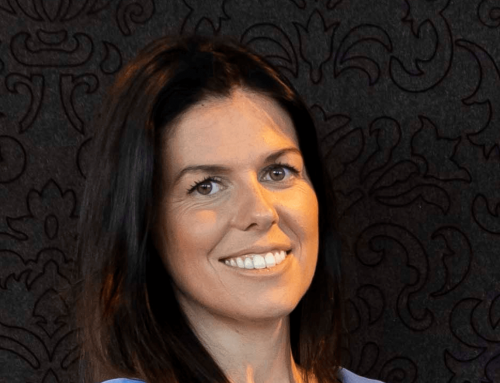


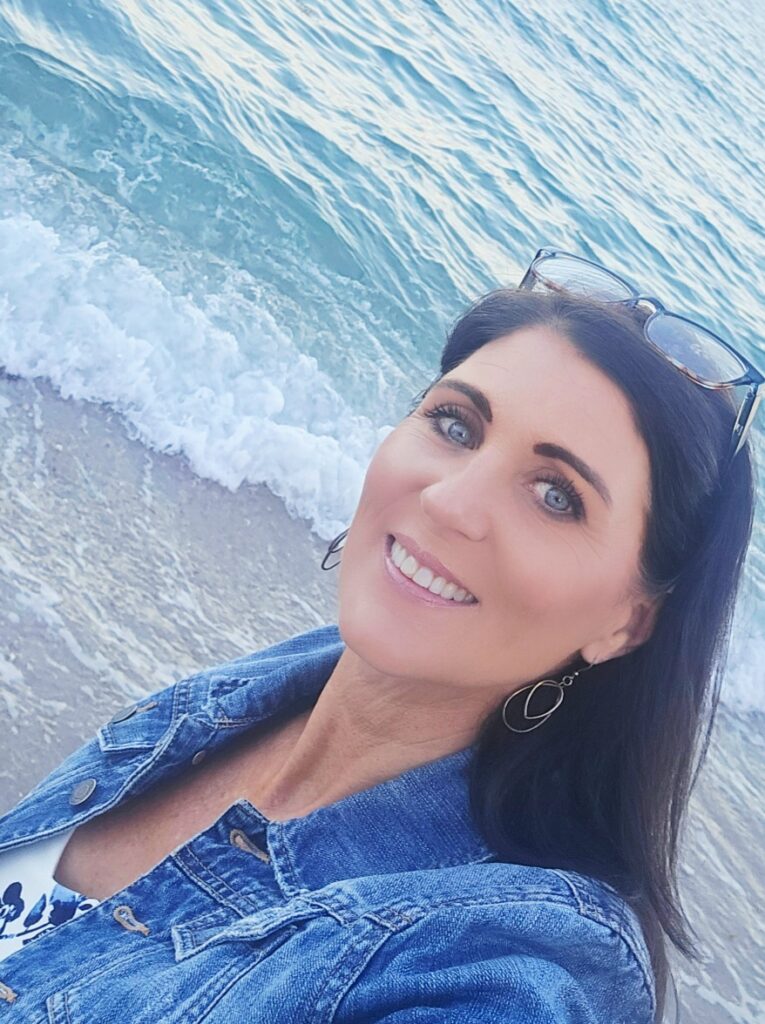
Susie Sanchez is a professional executive assistant, keynote speaker, and advocate dedicated to “unmuting” the stories of life’s major transitions.
In this episode of The Leader Assistant Podcast, Susie shares her journey of navigating a cancer diagnosis, leaving the workforce, and returning with renewed purpose. She also talks about how preventive self-care is critical, especially for executive assistants.
LEADERSHIP QUOTE
The difference between the impossible and possible lies in a person’s determination.
– Tommy Lasorda
CONNECT WITH SUSIE
ABOUT SUSIE
Susie Sanchez is a professional Executive Assistant, keynote speaker, and advocate dedicated to “unmuting” the stories of life’s major transitions. Drawing on a diverse career – from the sidelines of the NFL to the front lines of corporate leadership – Susie shares her journey of navigating a cancer diagnosis, leaving the workforce, and returning with renewed purpose.
–––
THE LEADER ASSISTANT ACADEMY
Enroll in the on-demand, AI-powered professional development resource for Leader Assistants who want to level up. Learn more -> The Leader Assistant Academy.
THE LEADER ASSISTANT BOOK
Download the first 3 chapters of The Leader Assistant: Four Pillars of Game-Changing Assistant for FREE here or buy it on Amazon and listen to the audiobook on Audible. Also, check out the companion study guide, The Leader Assistant Workbook, to dig deeper.
JOIN THE FREE COMMUNITY
Join the Leader Assistant Global Community for bonus content, job opportunities, and to network with other assistants who are committed to becoming leaders!
THE LEADER ASSISTANT PREMIUM MEMBERSHIP
To learn more about how you can join growth-minded Leader Assistants, check out our Leader Assistant Premium Membership for ongoing training, coaching, and community.
LEADER ASSISTANT LIVE EVENTS
Check out our constantly updated schedule of events for admins and assistants at LeaderAssistantLive.com.
SUBSCRIBE
Subscribe to The Leader Assistant Podcast so you don’t miss new episodes!
You can find the show on Apple Podcasts, Spotify, Google Podcasts, Pandora, and Stitcher.
Join the email list to get an email when a new episode goes live.
LEAVE A REVIEW
If you’re enjoying the podcast, please take 2 minutes to rate and review the show on Apple Podcasts here. Each review helps me stay motivated to keep the show going!
–––
EPISODE TRANSCRIPT
00:00->00:11 Susie
Hi, I’m Susie Sanchez.
Today’s leadership quote comes from Tommy Lasorda, the difference between the possible and the impossible lies in one’s determination.
00:17->00:24 Speaker 02
The Leader Assistant podcast exists to encourage and challenge assistants to become confident, game-changing leader assistants.
00:34->01:08 Jeremy
Hey friends, welcome to the Leader Assistant Podcast.
It’s your host, Jeremy Burrows, and this is episode 388.
You can check out the show notes and links for this conversation at leaderassistant.com/388.
Today I’m speaking with Susie Sanchez.
Susie…
Is a professional executive assistant, keynote speaker and advocate dedicated to unmuting the stories of life’s major transitions.
01:08->01:14 Jeremy
And you’ve got a diverse career and we’re going to get it right into it here in a second.
But first off, welcome to the show.
01:15->01:17 Susie
Thank you.
Thank you, Jeremy, for having me today.
01:18->01:20 Jeremy
What part of the world are you in?
01:21->01:29 Susie
Currently, I’m in the mid-southwest.
I’m in Arkansas as we speak.
Born and raised in California and have spent the last four years in Georgia.
01:30->01:35 Jeremy
Nice, nice.
And what do you love to do when you’re not working?
01:36->01:48 Susie
Spending time with my children and grandchildren.
I have three beautiful grandchildren.
Love spending time with them when I’m not working.
Being out in the garden, anything active, very much an outdoor person.
01:49->01:59 Jeremy
Nice.
Awesome.
Well, tell us a little bit about your career journey first.
And, you know, how did you end up in the executive assistant profession?
02:01->02:35 Susie
Well, I have a pretty diverse background.
I’ve got about 25 years now of executive experience.
Initially, I started with IBM in San Jose, California, back in 1994, did a tenure there.
Tincture there with IBM and the software division.
Um, and that’s where I learned everything I, I know today about being an executive assistant.
Um, that was obviously pre.com error, right.
Going into the www.internet world.
So, um, being an EA at the beginning of that transformation all the way up to now going into the AI world, it’s,
02:36->03:06 Susie
it’s been quite a journey.
Um, So 10 years at IBM, I just finished a 10 year tenure with FICO, Fair Isaac, started with FICO in 2015 through last September,
2025. It was a great ride with FICO working for the executive leadership team over there at FICO, again, another software firm.
And in the middle of that, I’ve done a lot of interesting things.
I was a professional cheerleader in the Bay Area in California for the Raiders as a Raiderette during the 2011-2012 season.
03:06->03:37 Susie
Hit a little bit of…
I guess, notoriety and fame in that as I was one of the oldest cheerleaders on the sidelines that season at 38 years old.
And our daughter had had a child young, so I was quoted the grandmother on the sidelines and got a lot of national and international
press just from that experience.
The main takeaway for that for me was anyone can go out and live a dream at any age.
And I did just that.
03:37->04:08 Susie
And so I went on to write my book, The Dream Lived.
So now I can also consider myself a published author because I wanted to share the story about it’s never too late at any
age to live out a childhood dream.
I wanted to be a professional dancer, not necessarily a professional cheerleader, but
I couldn’t get out to the Rockettes in New York.
So how do you do that locally in California?
So raising kids, I found a way.
And I love to inspire the world with that.
We all have a dream, a story, a mission to live out.
And I think it’s all possible within all of us.
04:09->04:38 Susie
And then unfortunately, in 2021, I was hit out of nowhere with a cancer diagnosis,
which kind of brings me talking to you today because…
As we all know, as executive assistants, we work endlessly hours, day in, day out for executives.
And in an instant, literally, when you get a cancer diagnosis, your whole world stops.
And you know the impact of that in yourself, what it’s going to do with the huge organization around you in which you run.
04:39->04:54 Jeremy
Wow.
So, yeah, just tell us a little bit more about that plan, that recovery, just kind of processing the situation.
Was that during the assistant portion of your career?
04:54->05:27 Susie
Yeah, yeah.
So I was right in the middle of working at FICO.
In 2021, as we all know, we were all home working, you know, remote at that point because COVID would have hit.
And I had anal cancer, which is caused from the HPV virus.
And I had told my employer, my executive staff.
That, Hey, I got to have this biopsy done.
I’m sure I’m fine.
I thought I was fine.
Um, I’m very transparent and open with the people in which I work with.
So I, I didn’t shy away from like, this is the kind of random part of my body that we’re referring to.
05:28->06:01 Susie
And, um, when I got the call from, um, my proctologist that evening, I was like, Oh darn.
And that next morning I got my, um,
Two executives, two high level executives on the line.
I had to have my husband sit behind me because I knew I wasn’t even going to be able to finish the sentence of saying
that I have cancer.
Because again, you wake up just to do your job, but I’m waking up to tell them that in an immediate moment,
everything’s going to be shifted and changed for myself, but more importantly for them.
And we all know when you work at the high level of these organizations, that’s an impact.
06:02->06:36 Susie
Um, but internally, I know I have an impact to go save my life and you’re instantly thrown into the cancer world of, of words
and, uh, appointments and understanding that you know nothing about, but you’re, you’re going to become an expert in it within a moment.
And, um, So yeah, it was tough.
My executives on the line that day, they had tears rolling down their face.
I got maybe four or five words in before my husband had to take over.
And I had a pretty hard cancer treatment plan for anal cancer.
06:36->07:07 Susie
It’s concurrent.
Chemo and radiation at the same time, which is very uncommon in most cancer treatment plans.
And it was advised of me from the oncologist, you know, you won’t be working, Suze, you need to take a leave of absence.
And how do you do that when you, you know, you’re the backbone of these huge pioneer companies and software firms and, um,
But you have to know in an instant, you got to go save your own life, right?
And they wished me well.
I thought, oh, I can work a few more weeks.
07:07->07:39 Susie
And after just a few of those MRIs and PET scans, your brain’s everywhere.
And it’s kind of not fair to them, right?
They need that person that’s always on.
And you know instantly that your brain is elsewhere.
And so, yeah, I went on a leave of absence with FICO from April of 2021 on.
Through December of 2021 to go battle a cancer treatment.
The company was generous.
I had short-term disability that went into long-term disability.
07:40->08:12 Susie
Thank God for all the benefits we have at these corporations in which we work at.
I personally, and maybe would advise this if this ever happens,
Happens to anyone else listening.
I pray to God no one else gets cancer, but I know that’s not a reality.
I kept my team involved every month, even though I turned off life and I turned off the computer and the firm.
I would email them about once a month of where I was in my journey with actual treatment, post-treatment.
08:13->08:47 Susie
When I got the call or the scan showing that I was cancer free, what, you know, uh,
chemo brain looks like where my recovery state was.
I just wanted to, I didn’t have to, but I chose to keep them on the journey with me.
And my CEO will Lansing at the time, he really appreciated that.
Like it’s personal, right?
Cancer becomes very personal.
The region of my body that I had cancer was extremely personal, but it, it,
It was already me showing that advocacy work of this could happen to anybody.
08:48->09:11 Susie
And I just, I just took them on the journey and it’s, we’re already a close tight niche firm,
but it made it even closer.
And, and going back into, to work in 22 and going to our big offsite events, you know, the whole firm knew me,
knew my story and, you know, thank God, Susie, you made it and you’re alive.
09:11->09:11 Jeremy
Yeah.
09:12->09:12 Susie
Yeah.
09:13->09:29 Jeremy
Wow, that’s great.
It’s so great that they were so supportive of you and getting, you know, obviously battling and fighting and beating it and coming back.
How did you manage the new normal when you returned to work?
09:29->10:05 Susie
Yeah, Jeremy, and that’s exactly it.
In the cancer world, post-treatment, it is considered the new normal.
My oncologist actually preferred I had stayed out a little bit longer on leave of absence because they, as the radiation oncologist,
they know what they’ve done to you.
I know what’s been done to me.
And he’s like, Suze, you look perfect from the outside.
No one really knows what you’ve just gone through.
So don’t over jump back into your role
And do too much because people aren’t going to know the difference of what they can expect of you.
10:07->10:39 Susie
And looking back hindsight now, I kind of wish I had taken a few more months.
I think a few more months off would have been a little bit more beneficial for me, only because, as we know as EAs,
we’re sharp, we’re moving, we’re always on target, and everyone’s turning to us, right,
for all the answers or pivots to different areas of the firm.
And post-cancer and post-chemo, your brain doesn’t fire the same.
Brain fog, chemo fog is a real thing after chemotherapy.
And I was just real.
10:39->11:13 Susie
I was just honest with everybody.
It’s going to take me a minute.
I mean, you know all your basics, but you just don’t have that speed that you once did.
I had a little bit of word forgettingness because of the chemo.
And so when I would speak quickly and say, oh, it’s right, you know, the chair’s right there, but I visually could see chair,
but I couldn’t get the word out fast enough.
I would call it an it or a thing in a sentence quickly.
And it’s just time, time coming off of chemo and all the drugs that makes that better in the long run.
11:14->11:47 Susie
But it was the first time in an EA career of 20 some odd years where I
And mentally, I had to challenge myself in a space in my brain that’s been affected, that had been affected by cancer.
And it was a little bit rough.
The physical, so that’s kind of the mental part of returning to work from cancer treatment.
The physical part with anal cancer is again, the radiation.
And I had to be very up forward to everybody like, Hey, Jeremy,
11:47->12:18 Susie
if you and I are at an offsite meeting talking mid morning and I’m like, I gotta go.
It’s, it’s because I, I literally have to use the restroom immediately.
Like, you know, you lose some, some continence issues there.
Um, And and I would just be honest with my executive team, like, hey, guys, this is how it’s going to be.
And everyone understood.
And and you don’t try to make them uncomfortable.
You just try to make them understand this is where I’m at now.
And and everybody did, you know, and I had to.
12:19->12:49 Susie
An occasion or two where things got a little rough, you know, at off sites when I should have coffee or when I shouldn’t,
when you travel, I call it shifting.
You make adjustments in the EA world.
And, and I really think this conversation today is important because again, like I said, cancer’s on the rise,
cancer diagnoses are on the rise.
Luckily more people are beating cancer because,
And living and so we can return to that work
12:50->13:24 Susie
Work environment, that workplace.
But this is a new area and conversation that’s not discussed enough.
And I just felt it was important to share with your viewers, EAs in particular, because that’s the field I come from, that it’s
doable, right?
I could have hung up everything and said, oh, I’m not returning to work.
I’m By giving all that up, it still would have shown that cancer won me in the end.
13:24->13:32 Susie
And I wasn’t I wasn’t going to let that the beast of cancer do that.
So returning to work to me was a real powerful moment within self.
13:33->14:07 Jeremy
Yeah.
So I know, you know, I know a handful of assistants,
even just in the past couple of years that have also had their own cancer diagnosis and treatment and battles.
What do you…
Let’s talk a little bit about, you know, in general, setting the out of office, um, you know,
as it will for your soul transitioning from, you know, 24 seven, always on responsive.
14:07->14:38 Jeremy
You’re like, you know, available all the time to just, um,
100% Focusing on yourself.
So how was that?
Because I know, you know, different type of story, obviously, but my executive, my prior executive was unexpectedly fired.
And so I went from like…
On call supporting this executive, just everything was about helping him achieve his goals to all of a sudden he’s fired.
14:38->15:14 Jeremy
And I’m just like, wait a minute.
And then I realized I was burned out and I needed to take care of myself and my family.
And I kind of I talk a lot about that in some of the episodes and in my book, of course, but
Just this idea of shifting your focus and hopefully we can learn from our stories on how and people listening can learn from our
stories in the sense of how do you focus on yourself more before you get that terrible experience that happens that forces you to do
15:14->15:15 Jeremy
that?
Does that make sense?
15:16->15:47 Susie
Yep.
Yep, it sure does.
Because I kind of see two parts to that question.
So the first part of the audio out of office, like you said, going 24 seven and instantly turning that computer off.
It, it’s scary, right?
It’s spooky.
But everything in that moment of being told you have cancer is
Instantly changes and alters the rest of your life.
And so, like I said to my executives, Hey guys, I’m going to stay on for a few weeks, you know, I’ve got this.
15:47->16:21 Susie
And then he does get me in one pet
Machine, PET scan machine or MRI.
And I’m like, I can’t do this.
I can’t, I can’t juggle it all where, you know, I can juggle everything, right?
As EAs, we can juggle everything always, but it’s something that have a magnitude that big.
You have to be realistic to yourself and say, I can’t do it.
And, uh, Marsha Cross, uh, the actress, she’s a survivor of anal cancer, uh,
And she had told me early on, right before I started treatment, Susie,
this is going to be harsh and this is going to be hell and it’s going to be fast.
And I can tell that you’re a giver and you’re not a receiver.
16:21->16:53 Susie
But for the first time in your life, you’re going to receive and you’re going to surrender.
And I never forgot her telling me that because I thought, oh, no, that’s not, you know, I got this.
And And sure enough, when they say concurrent cancer treatment, which is, again, radiation chemo at the exact same time, you’re pretty much bedridden.
You can’t do anything.
So the power of my mind of, oh, I can do it all, was squished by the body physically saying,
You can’t.
We’re going to hit you with the chemo.
16:53->17:23 Susie
We’re going to hit you with the radiation.
We’re going to flatline your blood because anal cancer and HPV related cancers is viral.
So they have to kind of flatline you out to bring you back up.
And so.
The beast in that moment of cancer and the treatment over one, my power of mind.
However, every single day, as I laid on a twin bed on my side downstairs, the brain’s still moving, right?
As EAs, we don’t stop.
17:23->17:57 Susie
So I would be Googling, um,
You know, we always talked about it’s COVID our office isn’t returning back into, you know, we’re going to be remote forever.
We’re not going to return to the office.
Where’s the next place that my husband and I can go live as our youngest is going away to college.
So I was still doing a lot of admin type Googling and searching on my computer because like you said, the, the EA,
the EA mind never, never shuts down.
Um, Which again is how we got to Georgia in the South because I was researching enough golf communities across the United States.
17:57->18:29 Susie
My husband’s a big golfer where we would want to live next.
So in our personal life, I was setting up our next plan and even getting on once a month and emailing my executive team.
You know, I took a lot of thought process in that email and it was so beautiful when many of them would reply to me
because it was that communication still in, um,
Steph, my EVP at the time who I directly worked for, we would talk once a month.
And just, you know, she would kind of give me the updates of where the firm was going.
18:30->19:06 Susie
And so I still, you know, like I said, I had my foot in the door, but I knew there would be no way.
And one of my other EAs, you know, took over the role when I was out all those months.
I’m very grateful for Megan for doing that.
It was a huge task of hers on top of supporting our CEO at the time.
But I think, Jeremy, you said it right on on the second part of your question, which is, do we work too hard,
too much, too often that we kind of got ourself in this situation of, I don’t want to say being in a, you know,
19:06->19:12 Susie
gave me cancer, but do we give too much of ourself and not enough self-care ahead of time?
19:13->19:14 Jeremy
Um, proactively.
Yeah.
19:15->19:49 Susie
Proactively.
Yes.
Like we, we juggle all balls and we love what we do.
I never take it back, but stress can kill you.
You know, like I kept saying, I’ve never had HPV virus anywhere.
How do I have this?
Susie 80 to 90% of society has HPV.
That’s a whole nother conversation about cancer, but, um,
Stress is a component that can wake up that virus.
And so I’ve learned now on the other side of cancer and on the other side of when I was working with FICO,
19:50->20:26 Susie
we got to take more inhale, exhale breaths, you know, and
Um, if I’m at an offsite when I might’ve stayed up later with that last group,
that’s going in for the evening before the 8am start, you know,
maybe I’m going to go in with the first group and get some better rest that night.
Right.
Cause I know I’m that first one that shows up in that boardroom that next morning to prep everything, to get everything ready.
Um, the immune system is a thing.
And I, I believe in my soul that executive assistants, we,
We are the backbone to all firms right we we keep those wheels moving at all times but the message to all eas out
20:27->20:54 Susie
there check yourself sometimes if if you’re getting a little bit run down tired your immune system feels a little off um maybe take
that vacation maybe you know uh
Take a leave of absence for a minute, just make sure you’re good, good with yourself.
Again, I don’t think being an EA caused me to get any of this cancer in which I had,
but on the other side of it, I, I did look at myself differently moving out of it for sure.
20:54->21:25 Jeremy
Yeah.
Great.
Well, Susie, thank you so much for sharing your story.
Is there any, just a couple quick little side questions.
I’d love to hear about just the short version of the book that you wrote and how that process was and what kind of pushed
you through to doing that.
I know as writing a book myself, it’s a very big project to take on.
It can be very
21:25->21:34 Jeremy
Uh emotional and taxing and all that but what what kind of pushed you through to complete that project yes uh so writing the dream
21:34->22:05 Susie
lived i began writing it in 2013 i was not working at the time i was in between careers like you said it’s it’s
a long journey writing a book uh so i knew i needed the space and time just to focus on that and the dream
lived is all about um
Kind of my whole life story.
I called it my memoir because I hadn’t had cancer yet.
So I definitely have another book to be written.
But it really was how I became a professional cheerleader because that year I was on team with the Oakland Raiders.
I had a lot of press about who’s this woman?
22:05->22:44 Susie
She’s 38 years old.
You know, sure, the headline was I was a grandmother on the sideline, but you peel the onion back.
There was a lot more depth behind that.
And I didn’t really get to return press that year.
And there was so much interest
I then had flown out to Dallas and I tried one more audition there.
I didn’t make the team, but even in Dallas, I had this huge, you know, press interest.
And I thought, okay, I got to write the book.
I got to tell, you know, share a story here rather than Googling my name and kind of understanding my story.
Let me just set it clear.
And so to write that book, Jeremy, wasn’t hard because it’s my life story of we all, again,
22:44->23:15 Susie
we all have maybe a childhood dream or thought process that, you know,
We then get older in life.
We’re like, oh, no way we can do that.
Well, yes, you can.
You know, even having children like I did.
Sure.
I wanted to be a rock at New York.
Well, I can’t really go to New York and do that raising children.
But there’s the 49ers.
There’s the Raiders.
They have huge kick lines.
That’s what I was interested in.
And let me go try for this.
I’m probably not going to make either of these two teams.
But let me, I think I was 33 the first year I tried out.
Let me at least try.
23:15->23:51 Susie
In my book, I talk about the what if.
I never want to be in a what if.
If you’re in a what if, you don’t know if you would have made it or not.
So at least attempt.
And it took me five years to make a semi-pro indoor football team first.
And then the following year, I made the NFL.
And so it’s really an inspirational story, motivational story about…
That anything of it that matters to a soul that you can do it.
Don’t give up in the process.
More importantly, the journey getting to that end results almost more amazing than that final destination itself, the impact,
23:51->24:23 Susie
the people you meet along the way.
And yeah, so that’s how the dream lift came.
I found, I did a publisher out of New York and,
Advantage of vanity publishers, what they’re called, I believe.
And it’s great, right?
It’s, it’s a place where you have self recognition, as you know, Jeremy of yourself, but you know,
you’re making a difference and an impact with at least one person reading that book, or they take away a line, right?
Somewhere, it’s something you said in, in, in those pages.
24:24->25:00 Susie
And my big message to everybody is we all have a dream and better yet, we
all have a story and we all have a book to write in life.
So why not push forward and push yourself if you have the desire and make that happen.
And like I said, I have a cancer book at some point to continue to write.
I’m nowhere there right now.
I can say that in writing that I do like to do a lot of speaking events about HPV or cancer, but again,
It was really important for me to reach out to you and think, you know what?
I got to talk to my EA world out there because sadly, now that I’m a cancer survivor,
25:01->25:35 Susie
I see cancer stories all the time and younger and younger people, men and women are getting diagnosed with cancer and it’s spooky.
And the good of it is we’re living.
And so I want to kind of help be a bridge to help when you do get a cancer diagnosis,
you’re going to make it.
And more importantly, Hopefully you can return to that place of employment and, you know, maybe talking to corporations about, hey,
you’re going to get people like me coming back into the workforce.
So because too many of us young, you know, are unfortunately getting cancer diagnoses.
25:35->25:35 Susie
Yeah.
25:37->25:59 Jeremy
Well, Suzy, thank you so much again.
Love the work that you’re doing and the passion you have for helping others dealing with cancer diagnosis,
but also specifically the executive assistant community.
I know we appreciate you.
And yeah, what’s the best place for people to reach out if they want to say hi and connect?
26:00->26:18 Susie
Yeah, I think you have my links there.
I’m on LinkedIn.
You can find me on LinkedIn.
I have a small website that I made again when I was home, laying on the side of radiation and chemo.
It’s my own website.
I’ve not gone out professionally and had it done.
So I apologize for that.
But I kind of, as an EA, I kind of like that too, right?
26:18->26:20 Speaker 02
Like I created this because I had a lot of content.
26:20->26:54 Susie
I had a lot of content from the book.
I had a lot of content online.
With the Raider organization.
And I just needed a place to gather all of it.
And I said, well, I’ve got time.
I’ll go out to Wix and I’ll, you know, again, being EAs, we can juggle all the balls in different ways.
So yeah, susiesanchez.com.
You can, you can find a lot of my content there.
And again, just sharing my story with you to other EAs and
It’s never too late to live a dream and self-care, self-help.
If you have a symptom with anything in your body that’s not going away, I can’t stress enough, like get it looked at.
26:56->27:18 Susie
I saved, my oncologist would say I saved my own life in my situation because I was misdiagnosed initially and I never gave up
looking at, you know, why does my booty itch?
You know, I need to figure out what’s going on here.
So self-care of yourself and as EAs, love what you do, but
But take that Excel for yourself as well when you need to.
27:18->27:38 Jeremy
Awesome.
Well, I’ll put all of your links in the show notes at leaderassistant.com/388 for people to reach out and connect.
But again, thank you so much for taking time.
Thanks for sharing your story.
And yeah, I wish you all, you and your family, the best of luck.
And we’ll talk soon.
27:38->27:40 Susie
Great.
Thank you, Jeremy.
Thanks for having me today.